Hewitt Pate
| As we blogged earlier, Chevron's continuing desperation to do anything it can to derail the potential $27.3 billion liability it faces for destroying part of Ecuador's rainforest has backfired yet again –this week the company again was caught misrepresenting key facts about the court-appointed expert who conducted a damages assessment not to the company's liking. On Tuesday, Chevron announced it had "newly discovered" evidence that the expert who conducted the damages assessment, Dr. Richard Cabrera, owns a remediation company in Ecuador that stands to benefit from a clean-up should the plaintiffs win the case. |

It turns out that far from a conflict of interest, Dr. Cabrera explicitly disclosed to the court that he was involved in remediation in Ecuador – a qualification that was properly cited by the court as one of the reasons why he was accepted as the independent expert in the first place. Obviously, Dr. Cabrera would never be able to benefit from a clean-up related to a case he worked on given basic conflict of interest rules in Ecuador. But since Chevron cannot attack the technically sound evidence in the Cabrera report, which calls the company out for creating pollution that led to more than 1,400 excess cancer deaths, it tried to fabricate a distracting sideshow. For more details about Chevron's misrepresentations regarding Cabrera, see this response: http://chevrontoxico.com/assets/docs/2010-02-09-cabrera-response.pdf
The factual deficiencies of Chevron's allegations didn't stop the company from its ill-advised decision to "man up" and deploy Chevron Vice-President and General Counsel Hewitt Pate as its lead spokesman on the issue. Pate was featured prominently in Chevron's press materials and was put squarely in the middle of what should have been a low-level food fight between the long-warring parties. The fact that Pate, who is the general counsel of America's third largest company, is expending his political capital to bolster unsubstantiated allegations demonstrates how frantic the company has become about Ecuador. It also raises serious questions about the judgment of Chevron's legal department, where it seems to be a job requirement to prove your "machismo" through frontline interviews. Any other company would use a consultant or public relations firm to execute this type of messy media hit job.
So what's behind this? The answer is politics. Making up a press "event" out of facts that you misrepresent is a classic maneuver popularized by the Karl Rove School of politics. It turns out that Pate and his colleagues running the Chevron legal department all played central roles in the last Bush Administration. This is not a coincidence, as all of these individuals looked like they picked up a trick or two from Rove during their years of government service.
Chevron has a major distinction among the world's super-major oil companies: while most hire their general counsels from within their own legal department after years of service, or from prestigious outside law firms populated by lawyers experienced in the ways of the energy industry, Chevron stands alone in hiring political lawyers out of Republican Administrations. The last two general counsels for the company (Charles James and Pate) have been hand-plucked from the Bush administration's Justice Department, where they worked closely with former Attorney General John Ashcroft. James, who worked closely with Pate in Washington and hired him for Chevron, has a reputation from Washington to San Francisco as being a hard-right political ideologue.
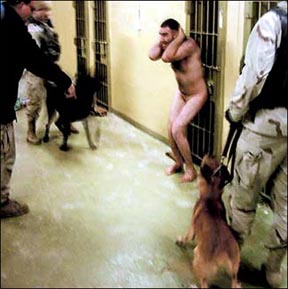
James made the decision to hire as Chevron's deputy general counsel Jim Haynes, one of the Bush Administration "torture lawyers" under potential indictment in Spain and now unable to travel abroad for fear of arrest. While Chevron keeps Haynes swept under the rug for public image purposes, speculation on the street is that he is running the day to day in Chevron's in-house legal department. He clearly learned a lot about Chevron's conception of human rights by providing the legal justification for torture to a Rumsfeld-led Pentagon, where he served as General Counsel before being blocked by the Senate for a federal judgeship because of his infamous memo justifying waterboarding.
With these personnel moves, Chevron has elected to build a general counsel's office that is filled with right-wing lawyers who have relatively little experience in complex litigation matters. It turns out that since Chevron's legal team is led by political ideologues, the company is trying to find a political solution to a legal problem. It hires outside law firms who, to obtain Chevron's lucrative business, fall all over themselves to enable this distorted and ineffective conception of politics-as-litigation. That's why Chevron keeps stubbing its toes over Ecuador. That's why it has lost five straight times before U.S. federal courts, including before the U.S. Supreme Court, in its increasingly futile effort to get any judge anywhere to grant the company some sort of relief. That's also why Chevron's latest gambit to take the entire Ecuador matter to an international arbitration panel, without the presence of the Amazon communities, now risks getting torpedoed in U.S. federal court. The ham-fisted approach championed by James and now Pate is one reason why the Ecuador liability has ballooned out of control for Chevron and threatens about 20% of the company's market value.
Chevron must realize that the old days of using political influence to quash legal cases in far-flung countries is winding down. In Ecuador, those days are clearly over. In the United States, the method doesn't work. The fact Chevron uses its new general counsel's limited credibility to distort basic facts shows how "quaint" Chevron is compared to its industry peers, most of whom (perhaps not coincidentally) reported far better financial results last quarter. "Quaint" is how former Bush Administration lawyers such as Chevron's Haynes and Alberto Gonzales – folks who never served in the armed forces themselves -- used to describe the Geneva Conventions when justifying those "harsh interrogation tactics" that the world considered torture. Most Americans would consider such talk profoundly unpatriotic, but in Chevron's legal department that's probably what passes for typical chatter around the water cooler. That, and the excitement generated by the Sarah Palin sighting at the latest Tea Party convention.
Since lost lives don't seem to have much impact on the thinking at Chevron, how many billions of dollars will have to be garnished before Chevron's Board wakes up to this internal hazard?