Showing posts with label human rights. Show all posts

Thursday, October 4, 2012

Richmond Residents Stand Up To Chevron


The Richmond, CA City Council voted for a resolution pushing Chevron to become a better corporate citizen in the city that Chevron has neglected for decades, even as its refinery pollutes and harms the health of people who live there. Take it from the Ecuadorians who have suffered at Chevron's hands for five decades in the rainforest, it will take much more than a resolution, but at least it's a start.

“Chevron must invest in good jobs and economic development for Richmond residents,” said community leader Lipo Chanthanasack, “like a good person, take full responsibility for the explosion and assure us this type of thing will never happen again.”

We're not holding our breath.

Read about it here.


Become a follower of The Chevron Pit.
Also follow us on Twitter at @ChevronPit and like us on Facebook.
Visit and watch a video on ChevronToxico.com to find out more.


Wednesday, May 26, 2010

Amazon Watch: Chevron Condemned for Human Rights Abuses, Activists Arrested

This press release was put out today by Amazon Watch. Read on:

Chevron Condemned for Human Rights Abuses, Ecuador Disaster at Annual Shareholder Meeting Today

Activists Arrested Inside and Outside Chevron's Meeting
Community Leaders Barred, Ejected from Annual Meeting for Exposing the Truth about Chevron


Amazon Watch
26 May 2010 - FOR IMMEDIATE RELEASE
Contact: Brianna Cayo-Cotter, Rainforest Action Network, 415-305-1943 or brianna [at] ran.org
Paul Paz y Miño at 510-773-4635 or paz [at] amazonwatch.org

Houston, TX – At Chevron's shareholder meeting today the company faced outrage for its continued lies, deception, silencing of critics, and human rights abuses. Concerned community leaders from several nations including Ecuador and Nigeria traveled from around the world yet were refused entry to Chevron's annual meeting.

One of the few community members allowed inside the shareholder meeting was Mariana Jimenez, a 71-year-old grandmother from Ecuador. She spoke directly to Chevron's CEO and Board and demanded an end to Chevron's lies about the massive oil contamination in Ecuador that is destroying her community in the Amazon rainforest.

"In 1976, I lost two young children. In 1979, one of my daughters became very sick with an unknown illness on her throat and lost her voice for three months. People are still getting sick every day. There are children born with birth defects. I want him [Watson] to take responsibility for the crime that his company committed in my country."

Rather than showing Ms. Jimenez and the 30,000 other Ecuadorean people the respect they deserve, Chevron CEO John Watson chose to mock the community's suffering and disingenuously claimed that, "My predecessor (former CEO David O'Reilly) showed great empathy and I will do the same."

"We don't need empathy from Chevron, we need them to accept full responsibility for the pain and suffering they have caused our people and clean up Ecuador now," said Guillermo Grafa, an Indigenous leader from Ecuador who was denied access to Chevron's shareholder meeting after traveling from his home in the rainforest.

Chevron's Board also felt the heat inside the shareholder meeting. During the Board re-election process, shareholders challenged Chevron's Board of Directors to intervene in the company's failed strategy of covering up its massive liability.

"While Chevron's management systematically deceives regulators, shareholders, and the public about its liability in Ecuador, the Board of Directors has been asleep at the wheel," said Maria Ramos, Change Chevron Campaign Director at Rainforest Action Network.

"Since taking the helm at Chevron, we have seen Mr. Watson continue to endorse this company's long running, expensive and dead-end strategy with respect to the dire situation in the Amazon -- a strategy which has cost both the company and the people of the Amazon dearly."

Meanwhile outside, Chevron arrested four shareholders and representatives who refused to leave Chevron property after they were denied access to the meeting. Those arrested were trying to voice their concerns about environmental destruction and human rights abuses in Ecuador, Richmond, CA, Houston, TX, and around the world. The people arrested were Han Shan and Mitchell Anderson of Amazon Watch; Juan Parras of TEJAS in Houston; Rev Ken Davis from Richmond. Antonia Juhasz of the True Cost of Chevron coalition was arrested while trying to make a statement inside the shareholder meeting after being admitted with a valid proxy. None of the arrested had been released as of 3:30 pm CT.

Amazon Watch staff Han Shan and Mitch Anderson participated in the "sit in" before their arrests. "More than 20,000 [Chevron] proxy shareholders have been barred from the meeting for no valid, legal or legitimate reason, but simply because they come from communities in Ecuador, in Burma, in Nigeria, in Richmond, CA like Rev. Davis here. And they want to deny those people speaking out about their concerns. It's appalling," said Han Shan. Mitch Anderson added, "We are not leaving the premises. They have disenfranchised our voices and they are going to have to drag us out of here."

Shelley Alpern, Vice-President at Trillium Asset Management Corporation was also outraged at Chevron's actions, stating, "I attend several shareholder meetings every year and I have never seen a company deny entry to legal proxy holders. This is outrageous and reflects very poorly on our company's respect for the laws that govern our proxy process. The shareholders in attendance today should stand forewarned not to say anything critical or it could be you next year."

More information at www.chevrontoxico.com.

Wednesday, April 28, 2010

Chevron Paying Whistleblower Diego Borja to Keep Quiet About Evidence Tampering

Several weeks ago, the indigenous and farmer communities revealed new information that Chevron "cooked" evidence in the Lago Agrio trial in order to avoid a judgment in the long-running lawsuit – and that the oil company was providing financial support to whistleblower Diego Borja to prevent him from going public with the company's fraud. Among Chevron's gross misdeeds in Ecuador, according to Borja: the oil giant directed Borja to create dummy companies in Ecuador to make it appear that a laboratory Chevron used to process soil and water samples during the environmental trial was independent, when in fact it was controlled by the company.

The Plaintiffs have long contended that Chevron was intentionally and fraudulently using bogus lab testing procedures to artificially lower the amount of contamination reported to the Court.

Borja, an Ecuadorian who was responsible for handling soil and water samples for Chevron during the environmental trial, was captured on audiotapes provided by childhood friend Santiago Escobar as saying Chevron "cooked" the evidence in the trial, and that he [Borja] has "correspondence about things you can't even imagine, dude….I can't talk about them here, dude, because I'm afraid, but they're things that can make the Amazons win this just like that (snapping his fingers)." (Click here for more information. See Transcript 4, October 1, 2009 p. 3, 7-9)

Borja was quoted demanding a "business partner(ship)" with Chevron that would pay off "like a big brass ring" in exchange for not turning over the evidence to the authorities. (See Transcript 2, October 1, 2009, pg. 6) He also bragged to Escobar, in reference to his work for Chevron, that "crime does pays." (See Transcript 1, October 1, 2009 p. 6)

At the time of the recording, Borja was (and apparently still is) receiving payment from Chevron for a number of expenses. Some might call this "hush money" to ensure Borja doesn't sing with too sweet a melody about Chevron's fraud in Ecuador. Among Chevron's payments to Borja:

A monthly stipend: On the tapes, Borja said that he made $10,000 per month while living in Ecuador and that Chevron is paying him an amount that allows him to live at the same level in the United States. Given that the cost of living in Ecuador is much lower than the U.S., the amount Chevron is now paying Borja is probably a healthy multiple of $10,000.

Re-location costs: In June 2009, Chevron obtained visas from the U.S. government and paid expenses to re-locate Borja and his family from Ecuador to San Ramon, California, Chevron's headquarters. Borja's wife, Sara Portilla, worked for Chevron for several years and apparently ran a Chevron laboratory that processed samples from the trial, even though Chevron had told the court the laboratory was independent.


Legal fees: Chevron has told reporters the company is covering Borja's legal expenses, including the fees of his criminal defense attorney, Chris Arguedes. Arguedes is a well-known criminal defense lawyer who represents Barry Bonds, among other notables. Paying for Borja's lawyer ensures that Chevron will limit the chance he has to be questioned by authorities about Chevron's own role in the fraud.

Housing: Borja said on the tapes Chevron is paying for a fully-furnished $6,000 per month house with a swimming pool in a gated community in San Ramon.

Car: Chevron is making a Saturn SUV available for Borja and Portilla to drive.

Security: Chevron is providing a security detail for Borja.

From living in Ecuador to living the high life in California – for Diego Borja, it is clear that crimes does pay.

(Click here <http://chevrontoxico.com/news-and-multimedia/borja-report/> for more information. See Transcript 3, October 1, 2009, pgs. 12-15)

Chevron has refused to comment on Borja's statements.

Monday, January 18, 2010

Chevron Using “Every Trick In The Book” To Evade Justice in Ecuador

Chevron's attempt to continually play its games to evade any semblance of justice in Ecuador is blasted in this post ("Ecuador Class Action Plaintiffs Strike Back at Chevron's Cynical Game of Musical Jurisdictions") from the International Business Law Advisor. Read on for Santiago Cueto's take on Chevron's activities:

The seventeen-year war between Ecuador's 30,000 class plaintiffs against oil giant Chevron continues its global odyssey, as the oil giant pulls out every trick in the book to avoid an impending $27 Billion judgment against it in Ecuador for contaminating an immense portion of rainforest and devastating the local population.

Chevron first fought successfully to force plaintiffs to try their lawsuit in Ecuador rather than U.S. courts. Then it sought (unsuccessfully) to win indemnification in U.S. courts from a possible judgment in Ecuador. And now it's filed for arbitration seven thousand miles across the Atlantic in Holland.

Chevron's latest tactical attempt to escape justice in Ecuador is consistent with its October 2007 press release, in which it promised the plaintiffs "a lifetime" of appellate and collateral litigation if they persisted in pursuing their claims.

Unfortunately for Chevron, it grossly underestimated the resolve of the class plaintiffs. As reported in The Wall Street Journal article, Chevron Plaintiffs Ask U.S. Court for Action, the People of Ecuador just filed a Petition to Stay Arbitration in United States District Court (S.D.N.Y) to enjoin Chevron from proceeding on the baseless international arbitration claim it recently filed in Holland. In December the Government of Ecuador filed its own Petition to Stay Arbitration.

As a litigator, I'm mindful that an attorney's obligation to zealously advocate his clients' interest may involve forum shopping as part of the procedural calculus, however, the obligation must be tempered with a keen understanding of what becomes abusive litigation.

Chevron's global quest for a favorable forum is a text book example of abusive litigation. To litigate a lawsuit across three continents is a cynical game of musical jurisdictions and takes corporate arrogance and the civil justice system to a new low. Isn't it time for Chevron to take a seat when the music stops in Ecuador?

What do you think?

This is the third in a series of posts discussing this extremely important case. Be sure to read Chevron Files International Arbitration Claim Against Ecuador: Forum Shopping in the Hague? and Chevron's Missteps: How Not to Handle Foreign Litigation.


Wednesday, December 16, 2009

Twenty-Six Members of Congress Ask USTR to Reject Chevron Interference in Landmark Ecuador Legal Case

House Members Express "Concern" About Oil Giant's Effort to Use Trade Policy to Deny Due Process in Environmental Lawsuit

WASHINGTON--(BUSINESS WIRE)--Chevron has been dealt a major setback in the Congress as more than two dozen representatives, led by Rep. Linda Sanchez and including powerful senior members, have signed a letter urging that the United States Trade Representative reject efforts by the oil giant to cancel Ecuador's trade preferences. Chevron has pressured the USTR and Congress for years to revoke or curtail Ecuador's preferences in retaliation for a lawsuit brought by 30,000 Ecuadorian citizens alleging that Chevron dumped billions of gallons of toxic waste into the rainforest over a period of more than 20 years.

Separately, a one-year extension of the trade preferences for Ecuador were approved in the House on Dec. 14 on a voice vote – the fourth consecutive year Chevron's lobbying effort against Ecuador appears to have failed. The Senate is expected to formally approve the measure by the end of the year.

The letter to the USTR, sent December 15, expresses concern about Chevron's efforts to influence a private litigation which originally was filed in 1993 in U.S. federal court by several Ecuadorian indigenous tribes and farmer communities, but was sent to Ecuador at Chevron's request in 2002.

"We urge you to reject Chevron's request and reaffirm that U.S. trade agreements will not be used as leverage to interfere in private claims progressing through Ecuador's legal process," the representatives wrote in the letter.

Among the 26 Members taking this strong stand with Rep. Sanchez were: the Chief Democratic Deputy Whip and Vice-Chair of the Energy and Commerce Committee's Trade Subcommittee, Rep. Jan Schakowsky (D-IL); the Chairman of the Human Rights Subcommittee of the Foreign Affairs Committee, Rep. William Delahunt (D-MA); eight Members of the Ways & Means Committee, including the chairman of its Oversight Subcommittee, Rep. John Lewis (D-GA); and eight members of the Appropriations Committee, three of whom also oversee State Department matters and Foreign Operations. Judiciary and Rules Committee Members also were among those lending their support.

Other members signing the letter were Reps.: Lloyd Doggett (D-TX), James McGovern (D-MA), Marcy Kaptur (D-OH), Earl Blumenauer (D-OR), Danny Davis (D-IL), Sam Farr (D-CA), Steve Israel (D-NY), Raul Grijalva (D-AZ), Brian Higgins (D-NY), Phil Hare (D-IL), Hank Johnson (D-GA), Barbara Lee (D-CA), Betty McCollum (D-MN), Michael Michaud (D-ME), Jim McDermott (D-WA), James Moran (D-VA), Eleanor Holmes Norton (D-DC), Mike Quigley (D-IL), John Olver (D-MA), Lucille Roybal-Allard (D-CA), Betty Sutton (D-OH), and Fortney "Pete" Stark (D-CA).

Chevron is charged in the lawsuit with dumping more than 18 billion gallons of toxic waste into Amazon waterways and abandoning more than 900 unlined waste pits when it operated a large oil concession in Ecuador's Amazon from 1964 to 1990. A team of independent, court-appointed experts has estimated that at least 1,401 individuals have died from cancer related to exposure to the contamination and determined that damages could reach as high as $27.3 billion, according to a 4,000-page report turned over to the court last year.

The members of Congress write: "We do not prejudge the outcome of the case, nor do we take a position on the litigation. We do believe, however, that tens of thousands of indigenous residents of Ecuador who have brought this case deserve their day in court. We further believe that the USTR should not interfere in an ongoing judicial matter, particularly when this case involves environmental, health, and human rights issues that have a regional, and even global, importance."

Even though Chevron filed 14 expert affidavits in U.S. federal court praising Ecuador's court system to get the case transferred, once the evidence in the Ecuador trial pointed to the company's culpability it began a lobbying campaign in Washington to have Ecuador's preferences canceled. Chevron's lobbyists have made misleading assertions to the Congress that the company was granted a release from claims after a limited environmental clean-up in the mid-1990s, even though the release does not apply to the private claims in the lawsuit and the clean-up itself was fraudulent, according to the plaintiffs.

The ultimate goal of Chevron's Washington lobbying campaign was to pressure Ecuador's President, Rafael Correa, to interfere in his country's judiciary and quash the case as a way to maintain more than 300,000 jobs in Ecuador that are dependent on the preferences, according to Steven Donziger, an American legal advisor to the plaintiffs in the legal case.

"Chevron was trying to pressure Ecuador's President to violate his own Constitution and interfere in a private litigation to benefit the company in its battle with indigenous groups decimated by Chevron's pollution," said Donziger.

Chevron's lobbying campaign has sparked strong reactions across Capitol Hill and in the media.

On November 17, in testimony before the trade subcommittee of the Ways and Means Committee, Rep. Sanchez called Chevron's lobbying "extortion" and said, "Apparently, if it can't get the outcome it wants from the Ecuadorian court system, Chevron will use the US government to deny trade benefits until Ecuador cries uncle."

A recent editorial in the Los Angeles Times editorial blasted Chevron, noting that "If ... Chevron has its way, Congress will instead punish Ecuador because its government refuses to halt a private lawsuit against the oil giant.... to force a favorable outcome in a private claim would justly generate international outrage."

In 2006, then-Senator Barack Obama and Sen. Patrick Leahy wrote a similar letter to the USTR asking it to reject Chevron's petition, which it did.

Experts believe the Ecuador contamination – which covers an area the size of Rhode Island -- is the worst oil-related disaster on earth and would take at least two decades to properly clean. A final judgment in the case is expected next year.


Monday, October 26, 2009

Chevron Sullying Reputation of American Corporations Abroad; Garrigo Sullying Chevron’s Reputation at Home

Chevron's spokeswoman and resident "Misrepresenter in Chief" Silvia Garrigo was at it again during an interview with CNN's Rick Sanchez on Oct. 22. Garrigo, who professes to love the environment, last made headlines with her abysmal performance on CBS News' 60 minutes, where she dismissed health concerns in Ecuador's Amazon by comparing cancer-causing toxins in oil to the makeup on her face. This was Garrigo's classic line:

"I have makeup on, and there's naturally occurring oil on my face. Doesn't mean that I'm going to get sick from it."

The experts who run Chevron's embattled public affairs office either have very few options, or they apparently thought Garrigo's comparison of contamination to makeup was solid enough to put her on CNN. Garrigo was responding to Kerry Kennedy's account of her heartbreaking visit to the Ecuadorian rainforest where Texaco (now Chevron) intentionally dumped more than 18 billion gallons of toxic waste and abandoned over 900 unlined waste pits while operating a large oil concession from 1964 to 1990.

Kennedy, a mother of three and a longtime human rights advocate, described in detail the devastation she witnessed as a result of improper operating practices by Texaco (now Chevron). She told of the gasoline-like smell coming from the runoff from pipes intentionally designed by Texaco to discharge oil sludge and waste water from the pits directly into the rivers and streams used by the indigenous communities in the area for drinking, bathing, and cooking. She also recounted stories from the indigenous communities of rape and abuse at the hands of Texaco employees. This would not have occurred, she argued, if the residents were living in this country.

In response, Garrigo chided Kennedy for spending only a few days in the region -- as if it takes more than a few minutes to understand that huge open pits of oil, left untouched since Texaco abandoned them many years ago, are a mess that needs to be cleaned up. (Kennedy's trip is a few days more than any member of Chevron's management or Board of Directors has spent in Ecuador. No person with any real authority at the company – including outgoing CEO David O'Reilly, incoming CEO John Watson, outgoing General Counsel Charles James, and new General Counsel R. Hewitt Pate -- has been to the affected region of Ecuador.)

Garrigo then presented three arguments that she desperately wanted to share with the American public: 1) That Texaco had remediated its portion of the contamination and that what Kennedy saw was now the responsibility of Ecuador's government; 2) The cancer claims are false (Garrigo's apparent personal favorite); and 3) The Ecuadorian judiciary is corrupt.

All three arguments, not surprisingly, are either misleading or outright lies. The facts are as follows:

Garrigo: Any contamination Kennedy witnessed was caused by Petroecuador, Ecuador's state-owned oil company that inherited Texaco's well sites in 1992 when Texaco left the country.

Fact: Contrary to Garrigo's claim, Kennedy visited well sites built and run exclusively by Texaco. Aguarico 2 was solely operated by Texaco from 1974 to 1990 and then closed. This site was never operated by any other oil company. Kennedy dug mere inches into the ground before discovering oil in the soil, which is leaching into groundwater and ending up in the nearby stream where local residents drink the water. Kennedy saw the same contamination at Shushufindi 38, a pit opened by Texaco in 1975 and closed by Texaco in 1976. She also saw well site Aguarico 4, which was operated by Texaco from 1974 to 1984. In other words, Kennedy saw unlined waste pits built and closed by Texaco in the 1970s and 1980s that are still causing pollution today.

Texaco's so-called "remediation" cited by Garrigo involved fewer than 16% of the 916 pits that Texaco built. The remediation has been proven at trial to be either ineffective, or a complete fraud. Independent inspections of Texaco's "remediated" sites have found extensive levels of contamination, often thousands of times higher than the Ecuadorian norms that establish when human health is at risk. In fact, two Chevron lawyers and seven former Ecuadorian government officials are now under indictment for fraud connected to their involvment in the certification of the "remediated" pits. One of the Chevron lawyers under criminal indictment, Ricardo Reis Veiga, is thought of so highly by the company that he is still running Chevron's downstream operations in Latin America. (Reis Veiga also supervised Garrigo for several years on the Ecuador trial out of Chevron's office in Coral Gables.)

Garrigo: Any claims about health impacts in Ecuador from exposure to oil contamination are false.

Fact: It is well-established that exposure to any number of the chemicals and compounds that makeup oil is linked to higher instances of cancer – and numerous, peer-reviewed studies show elevated instances of cancer in the region of Ecuador which Texaco contaminated.

Is there anyone outside of Chevron who seriously believes there is no connection between consuming water and foods contaminated with oil and cancer? The independent, peer-reviewed studies measuring the impact of contamination on the health of people living in the Chevron concession area have found that cancer rates were anywhere from 1.7 to 4 times greater than for people living outside the area. One study found that the risk for spontaneous abortion was 2.34 times higher among woman living near the contamination. Based on survey data, the court Special Master calculated 1,401 excess cancer deaths resulting from the contamination. (Texaco, in the 26 years that it operated in Ecuador, never conducted a single health evaluation in the region nor took even one soil or water sample to determine if its operations were causing contamination.)

Garrigo: The courts in Ecuador are "corrupt to their core":

Fact: As Kennedy noted in her interview, the plaintiffs originally filed the lawsuit in New York Federal Court in 1993. Texaco and then Chevron fought to have the case removed to Ecuador arguing in 14 affidavits that the Ecuadorian judiciary was not only the more appropriate forum, but that the judicial system was competent and fair. Chevron won that battle, and the same case was re-filed in Ecuador in 2003. Once the trial started and evidence pointed to Chevron's culpability, Chevron changed its tune and started to attack the very courts it previously had praised. The animating principle: praise courts when you think you can win, condemn them when you think you are going to lose. But as Garrigo said on 60 Minutes when she got cornered by correspondent Scott Pelley, the reality is there is no court in the world that Chevron would agree to because Chevron is above the law and the claims relating to the pits Kennedy saw are "frivolous".

In reality, Chevron has tried to corrupt the Ecuadorian court process to derail the trial and evade a judgment – which explains why Chevron is under three separate official investigations for possible criminal violations relating to its misconduct in Ecuador. It also why Ecuador's Attorney General has asked the Department of Justice to investigate the company for violating the Foreign Corrupt Practices Act. Garrigo asks about corruption? She should just walk down the hall. Garrigo's colleagues at Chevron have fabricated a false military report to cancel the Guanta judicial field inspection, have filed redundant motions to delay the trial, have threatened various judges when they refuse to rule in the company's favor, and have harassed and stalked the court-appointed Special Master to the point where he needed police protection. Just weeks ago Chevron discovered a "bribery scandal" that has all the telltale signs of a hoax perpetrated by the company to sabotage the trial. That doesn't count the numerous and anonymous death threats leveled at plaintiff's counsel during the trial – threats that don't seem of great concern to Chevron, which has remained silent on this most critical of issues.

At the end of the interview, CNN anchor Rick Sanchez asked Garrigo if contamination of the sort left by American corporations is "sullying our reputation in the world." She said she couldn't agree more but Chevron has always acted appropriately.

Chevron has always acted appropriately? From Ecuador (largest oil-related contamination on the planet), to Burma (where Chevron is partners with the repressive military junta), to the Philippines (where Chevron has caused spills, leaks, and fires in a residential area because of its oil depot), to Nigeria (where the company is accused of being complicit in an army-orchestrated killing of protesting villagers), at least some people on the receiving end of Chevron's misconduct would probably disagree with Chevron's Manager of Global Issues and Policy.

By its handling of the Ecuador case, it appears that Chevron not only doesn't mind sullying America's reputation. It also doesn't seem too concerned about its own reputation, either.

Thursday, October 22, 2009

Chevron has problems all around the world…

This press release from FACES, a group which tracks environmental justice issues in the Philippines and the United States:


FOR IMMEDIATE RELEASE
October 22, 2009
3:30 PM

CONTACT: Filipino/American Coalition for Environmental Solidarity (FACES
)
Aileen Suzara, FACES
510-409-8627, info@facessolidarity.org

US State Department Gets It Wrong on Chevron's Operations in the Philippine
s
SAN FRANCISCO - October 22 - Chevron Corporation's recent nomination to the State Department's annual Award for Corporate Excellence (ACE) for its Philippine-based operations was met with opposition from US and Philippine environmentalists. In response to the nomination, FACES sent a letter to US Secretary of State Hillary Clinton urging the State Department to rescind the nomination.

"Communities are suffering from Chevron's toxic emissions, catastrophic spills, leakages, and the risk of fires and explosions," said Mari Rose Taruc, FACES Chevron Campaign Coordinator. "Nomination to the ACE award ignores Chevron's negative impacts on the health of communities in the Philippines and around the world where they operate."

FACES open letter to Secretary of State Hillary Clinton highlighted Chevron's toxic operations in the Philippines. "Chevron Philippines is no corporation to be proud of, not by the US or the Philippines. A little corporate donation to a local project does not replace the many lives lost or harmed due to their toxic operations in the fenceline communities of the Manila oil depots, as well as around the world where they operate," said the letter.

Philippine civil society and environmental groups have campaigned for years for the relocation of the massive Chevron oil depot out of Pandacan, a residential district in Metro Manila. An estimated 83,000 residents are directly impacted by the depot. Accidental spills, leakages and fires have overwhelmed the community over the years. A study conducted by Global Community Monitor in 2002 detected high levels of benzene, a known carcinogen and component of gasoline, in the air around Pandacan.

Yet despite opposition from the community and Church leaders, public health concerns, numerous ordinances, and a 2007 Supreme Court decision that ordered Chevron to relocate their depot for the "protection of the residents of Manila from catastrophic devastation," Chevron has continued to stall out this order.

"We are asking for relocation of the depot to an area with a proper buffer zone, away from the nearest communities. This is a holocaust waiting to happen," said leaders of Advocates for Environmental and Social Justice (AESJ). AESJ is among the Manila-based groups currently leading a campaign to relocate the depot.

For more information on Chevron's impacts in the Philippines and worldwide, download the True Cost of Chevron Alternate Report: www.truecostofchevron.com and visit www.facessolidarity.o
rg.

###
FACES is an intergenerational organization that works for environmental justice within communities in the United States and in the Philippines, and builds partnerships through advocacy, education, service, and organizing.

Friday, October 9, 2009

Kennedy: "Exxon Valdez was an accident…What happened here in Ecuador was done on purpose."

Kerry Kennedy – daughter of Robert F. Kennedy – toured the contamination and pollution Chevron left behind in Ecuador this week. From the AP:

RFK's daughter backs Ecuadoreans in Chevron suit

(AP) – 5 hours ago

QUITO, Ecuador — Robert F. Kennedy's daughter sided with Ecuadorean Indians and farmers in their $27 billion environmental lawsuit against oil giant Chevron, saying Thursday after visiting former Amazon drilling sites that the case compares unfavorably to the 1989 Exxon Valdez tanker spill.

Kerry Kennedy, who toured parts of the Amazon province of Sucumbios by invitation of the plaintiffs to witness ecological damage, promised to lobby hard back in the United States.

"When I return home, we'll mobilize the human rights and environmental communities," said Kennedy, who is president of the Robert F. Kennedy Center for Human Rights. "We'll call on political leaders in the United States to investigate Chevron and its practices."

The plaintiffs, who say they represent 30,000 inhabitants of the region, are seeking damages for cleanup and to compensate for illnesses they attribute to oil-drilling contamination from operations carried out by Texaco.

Chevron Corp., which bought Texaco in 2001, says it was absolved of any liability by a 1998 agreement with Ecuador's government that followed a multimillion-dollar cleanup.

The plaintiffs contend the cleanup was a sham and say the agreement doesn't protect Chevron from claims by third parties.

Chevron must be held responsible and compensate the local populations, Kennedy told reporters in Ecuador's capital, Quito.

"Exxon Valdez was an accident," she said. "What happened here in Ecuador was done on purpose."

In a statement, Chevron invited President John F. Kennedy's niece to meet with its representatives and learn the company's side.

Chevron accused the Ecuadorean state oil company Petroecuador of being responsible for the damage, not Texaco. Petroecuador was a partner in the drilling consortium Texaco operated before pulling out in the 1990s.

Chevron has long claimed it can't get a fair trial in Ecuador. It contends the judicial system is corrupt and recently released tapes it claims implicate the judge in the case in a bribery scheme.

Judge Juan Evangelista Nunez denied any wrongdoing but nevertheless recused himself — likely delaying a ruling that had been expected later this year for a case initially filed in 1993 in a New York court.

Copyright © 2009 The Associated Press. All rights reserved.

Thursday, October 8, 2009

If you can’t earn a good reputation, you can always buy one…

It appears that corporate excellence isn't what you do anymore, but how much you're willing to pay. With a potential $27 billion judgment looming in Ecuador over oil contamination, Chevron has been working hard to hide its toxic legacy and promote itself as a corporation with a reputation worthy of honor.

But, instead of working to actually improve their image on the ground, Chevron has been hard at work currying favor at the State Department and throwing money at everything but the hundreds of pits of oil littering the most diverse region on the planet.

Recently Chevron announced a $5 million contribution for next year's Shanghai World Expo, after an appeal by Secretary of State Hillary Clinton.
http://blogs.wsj.com/chinajournal/2009/09/22/us-nearly-in-the-money-for-expo/

The company also paid for its own full-page, color Washington Post ad to congratulate itself on receiving the Richard C. Holbrooke Award for Business Leadership. Holbrooke, not surprisingly, now works at State, serving as the President's special envoy for Afghanistan and Pakistan.
http://www.newsweek.com/id/205546/output/print

The oil giant has most recently gotten itself nominated as a finalist for the Secretary of State's Award for Corporate Excellence. http://www.state.gov/r/pa/prs/ps/2009/oct/130172.htm.
A stunning coincidence following, as it does, hard on the heels of these generous financial payouts.

To be clear – we're not arguing that contributing to various projects like these is a bad thing, only that Chevron cannot try to hide their bad acts in countries like Ecuador, Nigeria, and Burma by contributing some money to the World Expo and fighting AIDS in Africa. While those are worthy projects, the company cannot balance the scales of morality by doing some good over there while ruining people's lives and polluting lands over here. It's like going to McDonald's and ordering a Big Mac and large fries but getting a Diet Coke – sure, the Diet Coke is better than a regular Coke but it doesn't make the Big Mac any better for you.

But it seems like Chevron isn't interested in that message. Instead of adapting their policies to finally fulfill their legal and moral obligations and to be a better corporate citizen, Chevron has instead chosen the strategy of using its record-breaking profits to buy itself a good corporate reputation.

Tuesday, June 9, 2009

Chevron CEO a sociopath?

Mike Papantonio, an extremely accomplished attorney who is not, to our knowledge, involved in any of the lawsuits against Chevron, published an interesting view of Chevron's response to the "True Cost of Chevron" on the Huffington Post. Take a look below or at: http://www.huffingtonpost.com/mike-papantonio/chevron-shareholders-igno_b_213091.html.

Chevron Shareholders Ignore Company's Abuses

A textbook sociopath is difficult to pick out of a crowd unless you have special training as a shrink. So just imagine how difficult it becomes when that sociopath is a corporation that spends billions of dollars on ad campaigns that hide their most malignant qualities. Money spent in the right way can easily mask that corporation's reduced ability to feel empathy for other people. It can hide irresponsible behavior and lack of remorse. It can disguise the patterns of deceitfulness that help define a sociopath's personality disorder.

Chevron had profits in 2008 of $24 billion. They have enough money to create slick commercials where they overwhelm us with images of blue skies over pristine looking waterways. Children are usually playing at the edge of that waterway with a family that stepped right out of Disney casting. The gentle voice in the background tells us that Chevron cares immensely about our health and our planet. That voice tells us that Chevron is frantically looking for solar, wind, and hydrogen alternatives to fossil fuel. But here is the reality check. Two weeks ago a coalition of the most prestigious human rights activists in the world handed Chevron a chilling report entitled, "The True Cost of Chevron." Reuters reported that the CEO at Chevron said the report was insulting and should be thrown in the trash. I agree that it was insulting for any corporation that does not want to be characterized as a brutal global thug. But David O'Reilly, Chevron's C.E.O., should not be too quick to throw this document in the trash.

It is a report that tells stories about human rights abuses in places like Nigeria and Burma, where Chevron has been accused of promoting military violence that involves beatings and kidnappings of community activists. Those activists object to oil extraction systems that destroy waterways, ecosystems, and breathable air. As you read this column, court hearings in Ecuador are taking place where Chevron stands potentially responsible for $25 billion in damages to Ecuador's waterways and aquifers.

Before Mr. O'Reilly throws this report into a trashcan, he should tell shareholders why Chevron was accused of providing influence gifts to U.S. Department of Interior employees last year. That is the scandal where government staff accepted thousands of dollars in influence gifts, and engaged in sex and used cocaine with oil industry representatives. That was the very agency that was supposed to police Chevron's conduct on U.S. soil. But there's more. While Chevron is selling their green alternative image in multi-million dollar ads, the truth is that they are spending less than 3% of their almost limitless capital on developing green alternative energy. But why worry about alternative energy when they run an oligopoly that has swallowed up independent refineries and retail stations to the point that Chevron controls how much oil gets refined and how much fuel gets to pumps? Price manipulation is always just one fuel crisis away.

Prognosis for sociopaths is never good because they are too quick to deny that they have a serious problem. But I'm sure any well-trained shrink would at least advise Chevron to take a first step. That begins with reading the report.

Sunday, May 31, 2009

Alternate Annual Report on Chevron’s Human Rights Problem Around the World

Apparently we're not the only ones paying attention to Chevron's human rights problems. An "alternate annual report" has been posted about the impact of Chevron's operations on communities worldwide. We linked to it in an earlier post, but wanted to make it more easily availabe to you. Take a look after the jump: True Cost of Chevron.

Wednesday, May 27, 2009

“Chevron Botching Ecuador Case”

The Amazon Defense Coalition put out a press release today calling attention to an oil industry publication reporting about Chevron's Ecuador problem. Take a look:

Chevron Botching Ecuador Case, Says Influential Report

$27 Billion Liability in Ecuador "Poorly Handled" By Chevron's Top Management, Analyst Tells Leading Trade Publication


New York, NY (May 27, 2009) – Platt's Oilgram News, the leading trade publication for the oil industry, is reporting that "momentum seems to be growing against Chevron" in the long-running environmental case brought by Amazon communities in Ecuador that could lead to a $27 billion judgment later this year.

The article, published on Tuesday under the headline "Concerns Grow in Chevron-Ecuador Suit", quotes a leading oil industry analyst, Fadel Gheit, as saying the Ecuador case "is a mess in the ground and in public opinion" and has been "very poorly handled" by Chevron. The $27 billion liability is expected to be a major topic today at Chevron's annual meeting, with attention focused on how Chevron's Board of Directors had not independently vetted management's handling of the matter.

The lawsuit, being held in Ecuador at Chevron's request, will determine if Chevron will be forced to pay for a clean-up of the more than 18 billion gallons of toxic waste dumped by Texaco (now Chevron) when it operated an oil concession in the Amazon from 1964 to 1990. A team of court-appointed experts has assessed damages at up to $27.3 billion and a decision is expected later this year.

Several scientific experts consider the disaster to be the worst oil-related contamination on the planet. A team of U.S.-based reviewers found that the damages number is consistent with the cost of other large environmental clean-ups around the world.

Gheit, who works for Oppenheimer, was quoted in reference to Chevron's Ecuador liability as saying: "I think the longer it lingers the more it will cost. I would settle and cut my losses. Time is not on their side. The sooner they resolve it the better off shareholders are. I don't think it will cost $27 billion, but [it] will certainly cost a hell of a lot more than $1.8 billion" that Chevron has set aside for liabilities.


The article also quoted Barclay's Capital analyst Paul Cheng as saying, in reference to the Chevron liability, that "we would expect that any negative ruling [in Ecuador] would be damaging to the stock's near-term performance, and we would be an aggressive buyer to take advantage of any weakness."

Platts Oilgram News is widely recognized as the standard publication chronicling the oil and gas energy sector and its published rates are used as a benchmark within the industry. The article reported on concerns about Chevron being raised by the New York attorney general and public and private funds.

The article quotes a letter sent to Chevron by New York Attorney General Andrew Cuomo saying "this office has broad authority to investigate and pursue allegations of financial fraud and material misstatements in connection with publicly traded companies." Cuomo said he was looking into "Chevron's characterization of available legal defenses" and asked Chevron to estimate "possible damages if found liable … [and] what if any reserves have been established in contemplation of such damages being assessed against Chevron."

The Cuomo investigation is being brought under New York's Martin Act, which allows for both civil and criminal liability for fraud. Several New York shareholders had requested the probe to determine if Chevron is complying with securities laws.

Leaders from Ecuador's Amazon region are expected to attend the shareholder's meeting today and confront Chevron CEO David O'Reilly over the company's allegedly misleading assertions about Ecuador.

Thursday, May 21, 2009

Chevron Facing Potential Shareholder Revolt Over Ecuador

This press release was online today about Chevron's liability and how pissed some shareholders are about it. Take a look:

Chevron Management Dealt Major Blow with CalPERS Announcement on Ecuador

California Pension Fund Voting for Resolution Stemming from Chevron's $27 Billion Ecuador Liability in Rainforest

Pressure Grows as Funds from Connecticut, Philadelphia, Detroit Defy Recommendation of Chevron Management

SAN FRANCISCO--(BUSINESS WIRE)--Chevron is facing a shareholder rebuke at its annual meeting next week over the company's $27 billion Ecuador liability with the announcement that the nation's largest public pension fund in California is defying the recommendation of company management and voting for a resolution on the issue.

CalPERS, which owns an estimated $600 million of Chevron stock and controls $170 billion in assets, announced on its website today that it will vote for a resolution calling on Chevron to examine whether it complies with host country laws and environmental regulations. Chevron has been heavily criticized for violating such laws in Ecuador, leading to a humanitarian crisis among indigenous and farmer communities in an area of rainforest where Texaco admitted to dumping billions of gallons of toxic waste from the mid-1960s to the early 1990s.

New York State Attorney General Andrew Cuomo has also opened an investigation of Chevron to determine if it is misleading shareholders about the financial risks the company faces in Ecuador.

"The CalPERS vote is a significant announcement that puts enormous pressure on Chevron's management in the investor community," said Dan Orlow, a private American investor who is advising the Amazonian communities. "It demonstrates that important pension funds are now lining up against Chevron on Ecuador."

CalPERS and the two New York funds – the state's Common Retirement Fund and the Employees Retirement System of New York City -- are three of the largest public pension funds in the U.S. and together control more than $1 billion of Chevron stock. Other public pension funds that have announced their support of the resolution include those of Connecticut, Pennsylvania, Maryland, and the pension funds of firefighters and police in Detroit and other large cities.

Funds from three large unions -- the AFL-CIO, Teamsters, and AFSCME -- have announced their support of the resolution along with several smaller private funds, such as Trillium Asset Management in Boston.

The Ecuador liability, featured earlier this month on 60 Minutes in an unflattering report for Chevron, stems from the dumping by Texaco (now Chevron) of billions of gallons of toxic waste in the rainforest when it operated an oil concession from 1964 to 1990. Thousands of rainforest residents have been fighting a legal battle against the company for clean-up since 1993.

The case is in Ecuador at Chevron's request after it was initially filed by the communities in U.S. federal court. The company agreed to be subject to jurisdiction and be bound by any ruling in Ecuador as a condition of the case being transferred out of U.S. court, which makes the enforceability of a judgment out of Ecuador likely despite what the company is saying to shareholders, said Steven R. Donziger, an American legal advisor to the Amazonian communities.

The liability appears to be the largest ever faced by an oil company for environmental damage, and almost surpasses the $31 billion price tag paid by Chevron to purchase Texaco in 2001. Chevron's management has announced it expects an adverse judgment in the case but has said it would appeal, while the plaintiffs have announced they plan to ask the court to hold the amount of any judgment in escrow pending appeals – a move that could severely hinder the company's cash position in a time of relatively low oil prices, according to analysts.

Previously, the Securities and Exchange Commission denied an attempt by Chevron management to prevent the Ecuador resolution from coming to a vote.

The announcement by CalPERS comes the same week that Chevron's management filed with the SEC an open letter to shareholders urging them to vote against the Ecuador resolution. That letter – signed by Chevron Corporate Secretary Lydia I. Beebe – contains incorrect and misleading information and appeared to backfire, said Donziger.

"Each assertion in the Beebe letter is either false, materially misleading, or incomplete except for the part where the company admits it might lose the legal case," said Donziger.

"Our team is being contacted repeatedly by shareholders and analysts who are concerned that Chevron management is not fully and honestly disclosing the company's exposure in Ecuador," said Orlow. "There is a real concern that Chevron is not playing it straight and that it might have overpaid for Texaco."

The Cuomo investigation is being brought under New York's Martin Act, which allows for both civil and criminal liability for fraud. Several New York-based shareholders, including Amnesty International, had requested the probe to determine if the company's public disclosures complied with securities regulations.

The annual meeting is scheduled for May 27 at Chevron headquarters in San Ramon, CA. Indigenous leaders from Ecuador's Amazon are expected to attend and confront Chevron's management about Ecuador.

In past annual meetings, Chevron CEO David O'Reilly occasionally has treated the Ecuadorian visitors with a discourteous tone and shut down the microphone when they attempted to speak, said Donziger.

About the Amazon Defense Coalition

The Amazon Defense Coalition represents dozens of rainforest communities and five indigenous groups that inhabit Ecuador's Northern Amazon region. The mission of the Coalition is to protect the environment and secure social justice through grass roots organizing, political advocacy, and litigation.

Saturday, April 25, 2009

Mickey Kantor Has an Ethics Problem

Mickey Kantor, normally an impressive individual, has a major ethics problem.

Kantor, as Peter Stone reports in The National Journal is taking money from Chevron to defend an American oil company responsible for what is probably the worst human rights problem in the world related to environmental degradation –the deliberate dumping of 18 billion gallons of toxic waste into the Amazon by Texaco (now Chevron) from 1964 to 1992 in Ecuador, all to keep production costs to the bare minimum. This dumping – and the separate abandonment of 916 unlined waste pits that for decades have been leaching toxins into soils and groundwater – has over the last four decades caused cancer rates to skyrocket, decimated indigenous cultures, and despoiled an area of the rainforest the size of Rhode Island. The entire catastrophe is at least 30 times larger than the Exxon Valdez spill, and thousands of people in this part of Ecuador are living in and around the contamination with no access to clean water or adequate health care. Chevron would never have done this type of thing in the U.S. where it would be called to account; it was done in an isolated part of the rainforest because the company calculated it could get away with it. To understand the issue, take a look at this short memorandum and this Q&A. And to understand how Chevron has treated this crisis, take a look at this document about Chevron's Top 10 Lies about Ecuador.

So Kantor is now trying to rescue Chevron from what is fast becoming a public relations and financial crisis of epic proportions. (Chevron, perhaps not coincidentally, has other human rights problems – it employs one of the six "torture lawyers" subject to possible investigation and prosecution. His name is William Haynes, the former general counsel for the Pentagon under Donald Rumsfeld.) Kantor is taking Chevron's money to help lobby the executive branch agency he used to head, the office of the United States Trade Representative. His objective is to persuade the USTR to "punish" Ecuador for letting indigenous tribes and farmer communities in the Amazon bring a lawsuit over this mess in Ecuador's courts. With this single representation, Kantor is violating both the spirit of the new ethics rules put forth by the Obama Administration and providing cover for a company involved in what the lawsuit claims is a massive human rights violation affecting tens of thousands of people. There is no evidence that Kantor or any of Chevron's other A-list lobbyists have even visited the affected region, read the studies about increased cancer rates, or talked to any of the thousands of victims. Yet they ply their trade with no moral sensibility about the consequences of their actions.

Chevron should be paying Kantor at least ten times his normal rate to take this on. The company spent $6.8 million on lobbying in the first quarter of this year (about $27 million on an annualized basis), not including the 20 or so people on the company's permanent government relations staff in Washington. Some significant portion of this spending relates to the Ecuador lawsuit, where the company faces a possible judgment of $27 billion for clean-up. Separately, two Chevron lawyers and seven former government officials are under indictment for lying about the results of an earlier clean-up that was appears to have been a fraud.

In a nutshell, Kantor has been hired by Chevron to undermine the legal rights of thousands of people to sue the company and hold it accountable. Rather than letting the trial finish, he is trying to shut the trial down. His job is to pressure Ecuador's President to violate his country's Constitution, interfere with his country's independent judiciary, and extinguish the legal claims held by thousands of his own citizens who are trying against all odds to address a life-threatening situation. What audacity these indigenous groups have. Last year, a Chevron lobbyist was quoted anonymously in a Newsweek story written by Michael Isikoff as saying, in reference to the Ecuador case: "We can't little countries screw around with big companies like this – companies that have made big investments around the world."

This quote reflects Chevron's attitude about the rule of law. The "little" people should not be allowed to sue big American companies. But big American companies should be allowed to sue, harass, and violate the rights of the "little" people if it's necessary to protect their bottom line.

Kantor wants Ecuador's government to behave like a "Banana Republic" and corrupt the legal process of its own country. This is a shameless attack on the rule of law. It is also dishonest. In 2002 Chevron consented to jurisdiction in Ecuador before a U.S. federal judge as a condition of the case being transferred out of U.S. federal court where it had originally been filed. At the time, Chevron submitted 14 expert affidavits praising the courts there as fair and adequate.

Kantor wants the USTR to decide the issue based on what is good for Chevron. In that vein, he claims in The National Journal story that the potential $27 billion in damages has "no logic", as if he is in a position to know. There is a 4,000-page report explaining those damages, based on 200,000 pages of trial evidence and more than 62,000 chemical sampling results that show contamination at 100% of Texaco's former production sites in Ecuador. I doubt Kantor has even seen the front page of this report, much less the executive summary or annexes. (This report has been reviewed by 25 respected scientists in the U.S., Ecuador, and Spain who have found its conclusions reasonable and the damages figure roughly in keeping with the cost of clean-up of other large environmental disasters.)

Kantor should recuse himself from the issue by virtue of his former work as the USTR ambassador, if nothing else. I also assume he has made enough money in his years as a lobbyist that he doesn't have to serve as a hired gun for Chevron defending a massive human rights violation that besmirches the image of the U.S. in Ecuador and the rest of Latin America.

Thursday, February 5, 2009

Great posting over at the DailyKos

Bob Zimway over at the DailyKos has posted a fantastic series of commentaries on Chevron's Amazon disaster. I think he summed up Chevron's plight quite well:

News: Chevron Faked Lab Results in Spill Trial

This news comes on the heels of two diaries I published in the last week, about the Chevron case, and about Yasuni National Park and Ecuador's new constitution.

The caca's really hitting the ventilidor for Big Oil. If this case goes against them, every third world country with a trans-national corporation drilling in its back yard has suddenly been dealt the upper hand.

I love it when a writer can be both snarky and accurate - if Chevron eats a $27 Billion judgment, such as they're facing in Ecuador, it will set a precedent that could lead to people all around the world suddenly having the right to sue companies for years of mistreatment. Suddenly we would be looking at a world where people who feel that they've been oppressed would actually have a way to fight back - they could go to court and try to prove their case, even if the company that destroyed their lands is far away. So, as Bob summed up so well, the caca is really hitting the ventilidor.

Tuesday, January 6, 2009

Chevron Wins Dubious Honor: Named to “10 Worst Corporations of 2008”

According to MoneyWeb, as 2008 ushered in a financial tsunami that became the biggest economic shakedown since the Great Depression, wide scale corporate corruption was forced out into the open witnessing a slew of business scandals.

AIG, Cargill, Chevron, Constellation Energy, CNPC, Dole, General Electric, Imperial Sugar, Philip Morris International and Roche top the list as the worst of the worst according to Multinational Monitor's annual list of the ten most terrible companies of the year.

"In the 20 years that we've published our annual list of worst corporations," says Robert Weissman, editor of the bi-monthly global economic publication. "We've covered corporate villains, scoundrels, criminals and miscreants. But we've never had a year like 2008."

"The financial meltdown and economic crisis," says Weissman, "illustrates that corporations - if left to their own worst instincts - will destroy themselves and the system that nurtures them."

The Multinational Monitor writes about Chevron:

Chevron: "We can't let little countries screw around with big companies"

The world has witnessed a stunning consolidation of the multinational oil companies over the last decade.

One of the big winners was Chevron. It swallowed up Texaco and Unocal, among others. It was happy to absorb their revenue streams. It has been less willing to take responsibility for ecological and human rights abuses perpetrated by these companies.

One of the inherited legacies from Chevron's 2001 acquisition of Texaco is litigation in Ecuador over the company's alleged decimation of the Ecuadorian Amazon over a 20-year period of operation. In 1993, 30,000 indigenous Ecuadorians filed a class action suit in U.S. courts, alleging that Texaco had poisoned the land where they live and the waterways on which they rely, allowing billions of gallons of oil to spill and leaving hundreds of waste pits unlined and uncovered. They sought billions in compensation for the harm to their land and livelihood, and for alleged health harms. The Ecuadorians and their lawyers filed the case in U.S. courts because U.S. courts have more capacity to handle complex litigation, and procedures (including jury trials) that offer plaintiffs a better chance to challenge big corporations. Texaco, and later Chevron, deployed massive legal resources to defeat the lawsuit. Ultimately, a Chevron legal maneuver prevailed: At Chevron's instigation, U.S. courts held that the case should be litigated in Ecuador, closer to where the alleged harms occurred.

Having argued vociferously that Ecuadorian courts were fair and impartial, Chevron is now unhappy with how the litigation has proceeded in that country. So unhappy, in fact, that it is lobbying the Office of the U.S. Trade Representative to impose trade sanctions on Ecuador if the Ecuadorian government does not make the case go away.

"We can't let little countries screw around with big companies like this — companies that have made big investments around the world," a Chevron lobbyist said to Newsweek in August. (Chevron subsequently stated that "the comments attributed to an unnamed lobbyist working for Chevron do not reflect our company's views regarding the Ecuador case. They were not approved by the company and will not be tolerated.")

Chevron is worried because a court-appointed special master found in March that the company was liable to plaintiffs for between $7 billion and $16 billion. The special master has made other findings that Chevron's clean-up operations in Ecuador have been inadequate.

Another of Chevron's inherited legacies is the Yadana natural gas pipeline in Burma, operated by a consortium in which Unocal was one of the lead partners. Human rights organizations have documented that the Yadana pipeline was constructed with forced labor, and associated with brutal human rights abuses by the Burmese military.

EarthRights International, a human rights group with offices in Washington, D.C. and Bangkok, has carefully tracked human rights abuses connected to the Yadana pipeline, and led a successful lawsuit against Unocal/Chevron. In an April 2008 report, the group states that "Chevron and its consortium partners continue to rely on the Burmese army for pipeline security, and those forces continue to conscript thousands of villagers for forced labor, and to commit torture, rape, murder and other serious abuses in the course of their operations."

Money from the Yadana pipeline plays a crucial role in enabling the Burmese junta to maintain its grip on power. EarthRights International estimates the pipeline funneled roughly $1 billion to the military regime in 2007. The group also notes that, in late 2007, when the Burmese military violently suppressed political protests led by Buddhist monks, Chevron sat idly by.

Chevron has trouble in the United States, as well. In September, Earl Devaney, the inspector general for the Department of Interior, released an explosive report documenting "a culture of ethical failure" and a "culture of substance abuse and promiscuity" in the U.S. government program handling oil lease contracts on U.S. government lands and property. Government employees, Devaney found, accepted a stream of small gifts and favors from oil company representatives, and maintained sexual relations with them. (In one memorable passage, the inspector general report states that "sexual relationships with prohibited sources cannot, by definition, be arms-length.") The report showed that Chevron had conferred the largest number of gifts on federal employees. It also complained that Chevron refused to cooperate with the investigation, a claim Chevron subsequently disputed.

Looks like we're not the only ones keeping an eye on Chevron's behavior around the world…

Wednesday, December 31, 2008

William J. Haynes: What Was Chevron Thinking?

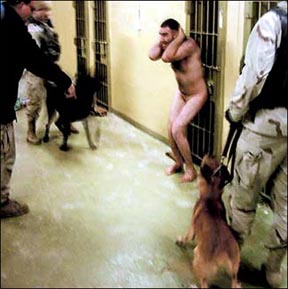
John Geluardi - author of The Snitch blog over at SF Weekly - put out a post last week about William Haynes, calling him "Chevron's Prince of Darkness". Apparently Haynes – who was recently hired by Chevron to serve as their chief corporate counsel - was just called out in a Senate Arms Services Committee (SASC) bipartisan investigation that found Haynes' actions while working for the Pentagon reviewing and approving of torture "deeply disturbing". Geluardi describes the hiring:

The Chevron Corporation has exposed its pestilent underbelly by hiring William J. Haynes II, a Department of Defense attorney who compiled lists of violent interrogation techniques for shadowy U.S. detention centers… In 2002 Haynes recommended a menu of 15 dehumanizing interrogation techniques to Secretary of Defense Donald Rumsfeld that included stress positions, removal of clothing, light deprivation and exploitation of phobias such as the "Arab fear of dogs." Rumsfeld eagerly signed off on Haynes' recommendations and dispatched a memo to Guantanamo Bay and other detention centers so they could be used on "enemy combatants," according to the senate investigative report.

The brass of nearly every branch of the U.S. Military vigorously opposed Haynes' ghoulish techniques. The opposition was so great, the list in part spurred Bush Administration lawyers to justify certain techniques by redefining the definition of torture so the CIA would be free to use nasty little methods such as waterboarding, a technique that simulates drowning. The method was invented by the syphilitic fiends who conceived the Spanish Inquisition (waterboarding was not on Haynes' list).

(More after the jump)

And it's not just Geluardi. Andrew S. Ross of the San Francisco Chronicle covered the story, in an article entitled "Report rips ex-Defense counsel, now at Chevron". Ross noted that the bipartisan report was signed by prominent Senators from both parties (including John McCain) and that when asked, Haynes defended his recommendations regarding torture. Editorials were run by the New York Times and the Miami Herald calling Haynes' advocacy of torture "deeply harmful" to the U.S.' image and urging that Haynes and the others who authorized the torture to be held accountable.

And all of this leads to the inevitable question: given all of Chevron's human rights problems around the world, why in the world would they hire William Haynes when he was so radioactive? For a company embarking in a multi-million dollar "human energy" public relations campaign, you would think they would have more sense than to hire one of the only lawyers in America who is under potential threat of facing charges as a war criminal.

But maybe they just don't care – or maybe they even see Haynes' willingness to advocate torturing prisoners as a plus. As Dugan over at Oil Watchdog stated, "with Chevron embroiled in human-rights lawsuits over oilfield pollution in Ecuador, and facing possible appeal of its exoneration in a Nigerian shooting case, Haynes (who walked straight into Chevron after leaving government in February), seems suited to the job."

Still, it seems unbelievable that Chevron really went out and paid big money to hire a guy under investigation by the Senate for human rights violations. After all, there had to be hundreds of highly competent corporate counsels around who wouldn't be putting "advocated and designed torture" as their "previous experience".

So what was Chevron thinking? Was it just that Darth Vader was unavailable?

Monday, December 22, 2008

The Real Human Energy


Over the past several months Chevron has rolled out a huge public relations campaign - their "human energy" campaign - (spending over $15 million dollars in October alone, according to one report) in an effort to greenwash the company's image. But I ran across this video over on youtube chronicling the real story about Chevron's "Human Energy" campaign. Take a look and let me know what you think...

Wednesday, December 17, 2008

Corruption: Shouldn’t We All Just Say No?

As I stumbled through the internet doing some follow-up research on the Foreign Corrupt Practices Act (FCPA) (following up on my post from a couple of weeks ago), as I was surprised to find that I'm not the first one to look to Chevron while investigating the FCPA: Charles James, the general counsel and head lawyer for Chevron recently spoke at U.C. Berkeley's law school, Boalt Hall, at a conference on global corruption.

While there wasn't a full transcript on the event, it seems from the summary of remarks that James identified himself as "not a big fan of the Foreign Corrupt Practices Act" and heavily criticized the enforcement of the law, seemingly arguing that when the law is enforced, companies like Chevron are at put at a competitive disadvantage.

James' remarks offered a very different perspective than the other panelists. Judith Miller, general counsel of engineering giant Bechtel corporation, argued that the short-term pain of losing business to companies that do pay bribes is well worth the payoff of curbing corruption, since bribes hurt the countries that receive them AND the companies that pay them (since the bribes retard development of the countries, encourage further corruption, and force the companies to incur additional operating costs to secure contracts). However, James doesn't seem to see it this way, only seeing the FCPA as putting Chevron at a competitive disadvantage because they can't legally pay foreign officials for preferential treatment.

You would think a company running a massive p.r. campaign to show their good corporate governance – the "human energy" initiative – would embrace the FCPA. But under Charles James, I guess not.