Showing posts with label obama. Show all posts

Friday, July 9, 2010

Chevron Lobbying Over Ecuador Lawsuit Criticized by Sierra Club, Catholic Bishops

Chevron's long-running lobbying campaign to cancel Ecuador's trade preferences over a potential $27.3 billion environmental lawsuit brought against the company by more than 30,000 Ecuadorian indigenous people has attracted the criticism of several influential and wide-ranging groups. Recently the U.S. Council of Catholic Bishops (USCCB) and the Sierra Club – America's largest and oldest environmental group, with more than 1.3 million members and supporters – wrote letters to U.S. Trade Representative Ron Kirk, urging him to ignore Chevron's "improper" lobbying. Archbishop Howard Hubbard, the chair of the USCCB's Council on International Justice and Peace, expressed concerns over attempts to "misuse" trade policy to "punish the very people trade preferences are intended to help when people try to defend the environment and human rights," while Executive Director Michael Brune of the Sierra Club wrote that trade "preferences were not intended to be, and should not be, used as a means of pressuring any government to foreclose the constitutional rights of its citizens who seek to use the legal system to protect and restore the natural world."

This isn't the first time Chevron's improper lobbying has drawn condemnation. In 2009 26 U.S. Congressmen sent a letter to the Obama administration, calling on the administration "to reject Chevron's request and reaffirm that U.S. trade agreements will not be used as leverage to interfere in private claims progressing through Ecuador's legal process." Earlier, then-Senator Barack Obama and Senator Patrick Leahy had similarly urged the USTR to ignore Chevron's improper actions.

Take a look at the letters themselves: you can read the USCCB letter here and the Sierra Club letter here. The letter from the 26 Congressmen is available here and the Obama letter here.

You can read a press release from the Amazon Defense Coalition about the criticisms below:

Chevron Draws Fire from U.S. Council of Bishops, Sierra Club over Improper Ecuador Lobbying

Oil Giant's Campaign to Cancel Ecuador's Trade Preferences Derailed for Fifth Straight Year

WASHINGTON--(BUSINESS WIRE)--Chevron's lobbying campaign to cancel Ecuador's trade preferences over a $27 billion environmental lawsuit brought by indigenous groups appears headed for failure yet again.

Last week, the office of the United States Trade Representative submitted a report to Congress that flatly ignored Chevron's attempt to have Ecuador's trade preferences canceled. It was the fifth consecutive year the oil giant had engaged the USTR on the issue and failed to achieve its objective. Each time, Chevron used heavyweights such as former Clinton Administration officials Mickey Kantor and Mac McLarty and Republican super-lobbyist Wayne Berman to carry its message.

Chevron's lobbying of the USTR, called an "attack on the rule of law" by the indigenous leaders, recently was criticized either implicitly or expressly by the U.S. Conference of Catholic Bishops, the Sierra Club, and numerous Congressmen. All wrote letters to USTR Ambassador Ron Kirk urging that his office reject Chevron's proposal, which would have cost Ecuador 350,000 jobs had it been accepted.

Chevron's lobbying also had been criticized by the Los Angeles Times, which editorialized that "halting the [Ecuador] trade agreement at Chevron's behest would harm broader U.S. interests."

The lawsuit, which is being tried in Ecuador at Chevron's request, accuses the oil giant of deliberately discharging more than 18 billion gallons of toxic waste into Amazon forests and waterways when it operated a large oil concession from 1964 to 1990. Six indigenous groups have had their traditional lifestyles decimated and more than 1,400 people have died of cancer due to Chevron's sub-standard practices, according to the lawsuit.

The amount of oil discharged by Chevron in Ecuador is far greater in quantity that the amount spilled in the BP disaster in the Gulf of Mexico, according to the plaintiffs. The damages claim against Chevron in Ecuador is $27.3 billion.

The letter from the Conference of Catholic Bishops, sent June 23 to Kirk, urged the Obama Administration "to resist direct or indirect interference in any legal processes Ecuador or its citizens may have initiated to assert their right to defend their environment and the health of their people."

Most Reverend Howard Hubbard, writing for the Bishops, also expressed concern over efforts to "misuse" trade policy to "punish the very people trade preferences are intended to help when people try to defend the environment and human rights."

In its letter, the Sierra Club wrote in reference to Chevron that trade "preferences were not intended to be, and should not be, used as a means of pressuring any government to foreclose the constitutional rights of its citizens who seek to use the legal system to protect and restore the natural world."

"This is especially true when our government is being asked to do so by, and for the economic benefit of, a powerful corporation that does not contest the central fact of pollution on a vast scale at issue in the case, only its own liability," said the letter, signed by Executive Director Michael Brune.

With 1.3 million members and supporters, the Sierra Club is the oldest and largest grassroots environmental organization in the United States. Both the Sierra Club and the U.S. Conference of Catholic Bishops are considered highly influential in Washington lobbying circles.

For years, the USTR – under both the Bush and Obama Administrations -- has snubbed Chevron over its Ecuador lobbying. Last year, 26 members of Congress, including several powerful senior members, urged the USTR to reject Chevron's effort to use trade agreements "as leverage to interfere in private claims progressing through Ecuador's legal process."

In 2006, then-Senator Obama and Sen. Patrick Leahy (D-VT) also wrote a letter to the USTR urging it to reject Chevron's lobbying and to steer clear of the private legal dispute in Ecuador.

The lawsuit, originally filed by 30,000 Ecuadorians in New York in 1993, was transferred to Ecuador after Chevron filed 14 sworn affidavits to the U.S. court praising the fairness of that country's court system. Shortly after the trial in Ecuador began in 2003 and the evidence pointed to Chevron's culpability, the company started to attack the courts it had previously praised and initiated the lobbying campaign over trade preferences.

The USTR report is only a recommendation to the Congress, which must decide by the end of the year whether Ecuador's trade preferences will be extended. Like the USTR, for several years running Congress has rejected Chevron's request over Ecuador's trade preferences.

Wednesday, June 2, 2010

Pat Murphy: Chevron’s Bogus Blogger Up to Old Tricks

Surprise, surprise: Pat Murphy, purveyor of the SanFranciscoSentinel.com (a small online "newspaper" that sells editorial control of its opinions while pretending to offer neutral commentary) is once again carrying Chevron's water in the company's never-ending campaign to escape justice for its environmental catastrophe in Ecuador.

Pat Murphy

This time, Murphy has attacked the indigenous people of Ecuador suing Chevron for having the temerity to characterize Chevron's man-made, planned disaster in Ecuador as larger than BP's accidental spill in the Gulf. In Ecuador, Chevron discharged the equivalent of at least 345 million gallons of crude into the rainforest where six indigenous groups lived for centuries. Due to Chevron, all of those indigenous groups have seen their lifestyles devastated – not dissimilar to what is happening right now to the fisherman of Louisiana.

The U.S. government's most recent estimate is that BP has discharged between 18 and 39 million gallons of crude into the Gulf. At the top end, that's about one-tenth as large as the dumping Chevron did in Ecuador when its predecessor company Texaco operated a large oil concession from 1964 to 1990. Texaco's sludge, now Chevron's problem, is still there: Take a look at photos of the contamination and its impacts.

The question for Murphy is: Why is it a tragedy when 18 to 39 million gallons of contamination are spilled in America, but Chevron is getting "defrauded" when people call attention to 345 million gallons the company systematically dumped in Ecuador?

The answer is simple: Because in the world according to Chevron, Ecuadorian lives aren't worth much – particularly when they are indigenous people living in the forest. And, of course, BP isn't paying Pat Murphy to spread their propaganda while Chevron is.

Amazon Watch and the Amazon Defense Coalition have demonstrated that Pat Murphy is a paid blogger who has sold editorial control of his website to Chevron – an accusation that Murphy has never denied. (He once stated that he was not being paid directly by Chevron.) Over the past two years Murphy has offered a steady stream of commentary and misleading facts meant to discredit Chevron's critics – critics that Chevron is working hard to silence. And if you are Googling the Chevron case in Ecuador from Rotterdam or some other far-flung place, you might actually think the "San Francisco Sentinel" is the leading newspaper of San Francisco rather than one of the least-trafficked news sites on the Web (it ranked 171,939 in popularity among websites, compared to 851 for the San Francisco Chronicle).

Of course, the practice of blogging or writing articles on behalf of clients without disclosing payments is considered highly unethical. But that's never stopped Murphy before, and we don't expect it to stop him now. When you lay down with dogs, as Murphy has with Chevron, you get fleas.

If Murphy really wants to understand the issues in Ecuador – and not just squander any semblance of journalistic integrity that he might have once had (or thought he had) – we would invite him to visit the impacted region. If Murphy had to drink the poisoned water being forced on the local inhabitants because of Chevron, he might be slower to take what amounts to "blood money" to help cover up an environmental and human rights tragedy that is unparalleled on Earth.

Tragic BP Gulf Spill Casts Light on Chevron Disaster in Ecuador

The Amazon Defense Coalition put out this release today:

Tragic BP Gulf Spill Casts Light on Chevron Disaster in Ecuador


While BP Is Largest Spill In U.S.,Chevron's Ecuador Disaster Is Largest In World


Chevron Admits Dumping at Least 16 Billion Gallons of Toxic Waste into Rainforest

SAN FRANCISCO--(BUSINESS WIRE)--As the nation remains riveted on the tragic BP spill unfolding in the Gulf of Mexico, Chevron still holds the record for creating the world's largest oil-related contamination and it happened deliberately in the populated Amazon rainforest in an even more sensitive ecosystem than the marshes of Louisiana.

Chevron's illegal oil-related dumping is at the root of a class action lawsuit in Ecuador where the oil giant now faces more than $27 billion in damages for poisoning an area the size of Rhode Island with 18.5 billion gallons of toxic "produced water," or more than 474 times the amount of contamination estimated to have been spilled in the Gulf of Mexico tragedy, according to calculations made by representatives of the plaintiffs.

Chevron's contamination has decimated the traditional lifestyles of five indigenous groups in the area, and one group has disappeared, according to the lawsuit. The pollution occurred when Texaco (now owned by Chevron) was the exclusive operator of a large oil concession in the rainforest from 1964 to 1990.

A 17-year trial against Chevron taking place in Ecuador's courts – moved there from U.S. federal court in 2002 at Chevron's request – is expected to end later this year. Chevron has declared the trial court is "biased" against it and has announced it will not pay any adverse judgment.

The plaintiffs in the trial are tens of thousands of rainforest residents, including the surviving members of indigenous groups called the Secoya, Cofan, Siona, Huarani, and Kichwa.

These are the facts of Chevron's dumping in the Amazon and how it compares to the BP spill in the Gulf:

  • In the 1970s, Chevron's predecessor company Texaco (bought by Chevron in 2001) perforated hundreds of oil wells across a 2,000 sq-mile swath of rainforest that was home to the indigenous groups. The area where Chevron operated is one of the most biodiverse in the world, containing almost 10% of the world's plant species.
  • Instead of re-injecting toxic "produced water" (which contains high levels of salt, pure crude, and the carcinogen benzene) deep into the ground – the industry practice then recommended by the American Petroleum Institute – Chevron dumped 18 billion gallons of it into rivers and streams. These waters had been used thousands of years by the local population for its drinking water.
  • The BP tragedy was an accident; Chevron's discharge in Ecuador was deliberate.
  • Chevron, as reported by 60 Minutes last year, also built more than 900 unlined waste pits to permanently store toxic sludge – another violation of industry standards. It then built pipes to drain the sludge into nearby streams.
  • Chevron also burned gas without controls, creating enormous air pollution and a "black rain" phenomenon in the rainforest.

These facts have been documented in numerous testimonies, in more than 200,000 pages of trial evidence, and in the book Amazon Crude written by law professor Judith Kimerling and published in 1991 just before Texaco fled the country in 1992, according to representatives of the plaintiffs.

Experts have concluded that the Chevron discharged at least 345 million gallons of pure crude oil directly into the rainforest ecosystem, including 17 million from ruptured pipelines. To put this in perspective, the U.S. government has estimated that between 18 and 39 million gallons have been spilled thus far in BP's disaster in the Gulf, and approximately 11 million gallons of pure crude was spilled during the Exxon Valdez disaster.

Just like BP in the Gulf spill, Chevron continually tries to obfuscate the facts and cover up its responsibility in Ecuador:

  • In 1972, a Chevron executive issued a memo ordering that all documents in Ecuador documenting oil spills be destroyed.
  • Chevron claims it was "released" from further clean-up responsibility based on a "release" signed with the Government of Ecuador. But Chevron's "remediation" was a fraud. Evidence presented at trial shows that the small number of pits "remediated" are still as contaminated as sites not touched.
  • As a result of Chevron's fraudulent "remediation," two company lawyers and ten former Ecuadorian government officials are now under indictment in Ecuador for lying about the clean-up results.
  • During the trial in Ecuador, lawyers for the plaintiffs have been subjected to death threats, a Nixon-style dirty tricks campaign to remove a judge, and the use of junk science by Chevron "experts."
  • Chevron claims high cancer rates are caused not by exposure to toxins, but by the poor personal hygiene among the local population.
  • Chevron also has tried to silence its Ecuador critics – pressuring media outlets to deny advertising about the company's human rights problems and even going as far to have five people arrested at its shareholder meeting last week.

For photos of this horrible disaster, click here, or get the book Crude Reflections by Lou Dematteis and Kayana Szymczak. A complete summary of the evidence can be found here. For Chevron's lies, click here. To purchase a copy of an award winning documentary film about the case, "Crude," click here. For the latest developments, see www.chevrontoxico.com.

Tuesday, June 1, 2010

Chevron’s Watson To Feds: Stop Us Before We Hurt Somebody

From a recent Dow Jones article: Chevron Corp. (CVX) Chief Executive John Watson said that the oil and gas industry has asked the U.S. government to raise safety standards for offshore drilling in order to avoid another "tragedy" like the massive spill that is still threatening the U.S. Gulf of Mexico.

In other words: "Stop us before we hurt somebody."

Watson's remarks are an astonishing admission from an oil industry CEO. He's acknowledging that oil companies are incapable of ensuring safe operations and conceding they will maximize profits and compromise safety standards unless the government steps in.

But Watson knows exactly what he is talking about – the damage that he is talking about is exactly what Chevron caused in Ecuador, an environmental and humanitarian catastrophe of epic proportions. Left to its own devices, Chevron put profits ahead of the safety of indigenous groups and the pristine environment of the Amazonian rainforest from the moment it landed its first helicopter in 1964 until it exited the country in 1992. By using substandard exploration and safety measures, Chevron "saved" an estimated $8 billion during three decades of exploitive oil drilling and exploration. This "savings" has resulted in the devastation of thousands of lives, an outbreak of cancer, and the decimation of indigenous groups.

The New York Times reported recently on a BP memo that admitted the oil company elected to use a cheaper type of cement casing system around the "blowout preventer" that experts believe may have prevented the explosion and the resulting spill. Texaco made a similar decision in Ecuador in the 1970s when it decided to not spend the $4 million at each of its well sites necessary to implement proper safety measures, such as the lining of toxic waste pits. Instead, Texaco's preferred method in the impoverished rainforest could be described quite simply: "dig and dump."

Instead of re-injecting deep into the ground the oil and toxic waste water left over from drilling well sites, as was the industry standard in the United States since at least 1962, Texaco dug over 900 huge holes in the ground and dumped a deadly mix of oil, chemicals and minerals into the unlined oil pits. Recent testing during the trial at about 100 of these oil pits and well sites revealed illegal and unacceptable levels of contamination that continue to leech into the ground, polluting the soil and water that the indigenous tribes and other Ecuadorians living in the area depend on for their survival.

The deadly consequences stemming from putting profits ahead of safety is a lesson that Chevron learned all too well in Ecuador. BP is now learning the same hard lesson in the Gulf. The question is whether either company will be held accountable.

Friday, May 21, 2010

Chevron Lawyer Admits “Release” Doesn’t Cover Ecuador Lawsuit

Chevron Lawyer Rodrigo Perez Pallares

If there was ever ironclad proof that Chevron is being deceptive in court and before the public about the "release" it claims it received in Ecuador, it can be found in the sworn deposition testimony of Chevron's own lawyer in Ecuador who signed the release for the company. It turns out that this lawyer, Rodrigo Perez Pallares, admitted under oath that the "release" does not apply to the claims in the pending Lago Agrio lawsuit in Ecuador. This contradicts what Chevron's American lawyers and public relations operatives are telling judges, journalists, the SEC, and shareholders all over the world.

Proof of this admission can be read here. Remember, Perez Pallares negotiated and signed the "release" for Chevron so we can assume he knows what he's talking about.

Chevron's CEO, John Watson, and General Counsel, Hewitt Pate, continually refer to the release as "proof" Chevron's contractual rights are being violated in Ecuador by the mere existence of the lawsuit brought by the indigenous groups for environmental clean-up. The company has submitted this false information as "fact" to the Bush and Obama Administrations in an attempt to convince them to cancel trade preferences for Ecuador as a "punishment" for letting its own citizens sue Chevron in their own courts. (Chevron, remember, fought for nine years to move the case to Ecuador out of U.S. federal court where it was filed in 1993.)

But that's not all. Chevron is also basing an entire international arbitration against Ecuador's government – which commenced recently in London -- on what is essentially a misrepresentation of the facts. This is not the first time Chevron has tried this maneuver – they also tried it against Ecuador's government in a litigation in New York federal court that lasted from 2004 to 2009 (which is where Perez Pallares testified). In that case, Chevron hastily withdrew the "release" claim when it appeared a U.S. federal judge could actually review it and issue a ruling.

In his deposition, Perez Pallares was clear that Chevron's arguments about the "release" are bogus. Under questioning from a lawyer from Ecuador's government, he said the "release" does not apply to the claims of the plaintiffs in the Lago Agrio case.

An excerpt from his sworn testimony:

Q: But what [Article 8 of the MOU] does do instead is it carves out entirely any action brought by parties who were not parties to the settlement agreement. Would you agree with that?

The Witness (Pallares): I agree…

Q: If I'm understanding you correctly, and I don't mean to mischaracterize your testimony – you'll tell me if I'm incorrect – I think what you're saying is that a plaintiff can sue in Ecuador but can only obtain relief to the extent that Ecuador permits that relief.

Pallares: That's exactly it.

Q: But the MOU and the settlement doesn't affect that one way or the other. It doesn't give them rights they would not otherwise have. Is that a fair statement.

Pallares: That's correct.

Read the entire page of the testimony here.

Note also that section VIII of the Memorandum of Understanding signed by Chevron and Ecuador's government in 1994 explicitly states (in reference to the release):

The provisions of this agreement shall apply without prejudice to the rights possibly held by third parties for the impact caused as a consequence of the operations of the former PETROECUADOR-TEXACO Consortium.

Because of these facts, Watson and Pate have Chevron in a legal pickle over the Ecuador problem. Chevron is faced with overwhelming scientific evidence of the extreme destruction that Texaco's substandard operational procedures caused in the Ecuadorian rainforest when it operated there from 1964 to 1992. As a result, Chevron faces an enormous potential liability.

Chevron has spent years trying to evade accountability in Ecuador. The company has tried lobbying, public relations campaigns, wild accusations, and even a "Nixon"-style dirty tricks operation to undermine the trial. Now, Chevron is using all of its influence in Washington and around the world to try to pressure the government of Ecuador based on a myth about the "release" -- just so it can extract an advantage in a private litigation that it is losing.

Chevron needs to understand that the Obama (and Bush) Administrations try to make policy on what is best for the country, not what is best for Chevron. That is why for five straight years our government has renewed Ecuador's trade preferences over Chevron's objections.

About the only thing separating Chevron from that enormous liability in Ecuador is a misrepresentation about its supposed "release". That must not be terribly comforting for Chevron's shareholders, even if it gives false comfort to those managing the company.

Wednesday, May 12, 2010

Obama, Ecuador, and Chevron: Big Oil’s Hypocrisy


As the economic and environmental losses mount on the Gulf Coast so do the similarities between the growing BP oil spill and the existing oil contamination in the Ecuadorian rainforest, the latter courtesy of Chevron.

First and foremost, they both are ecological disasters that have forever changed the landscape’s environment and way of life for both the people and business owners of the Gulf Coast and the indigenous tribes of Ecuador.

In testimony on Capitol Hill BP, Transocean and Halliburton blamed each other for the accidental spill on the Gulf Coast, sounding much like Chevron in Ecuador, where the oil company has blamed everyone but itself for the billions of gallons of oil and toxic water dumped intentionally into the rainforest by Texaco, purchased by Chevron in 2001.

BP blamed Transocean and Transocean blamed Halliburton, just as Chevron has blamed Ecuador’s state-owned oil company, Petroecuador, and, oddly enough, even Texaco, arguing that just because it bought the oil company does not mean it is responsible for what Texaco did. (Never mind that this argument undoes about 150 years of legal rulings.)

Like Chevron, BP and its oil exploration partners are being very careful in their public statements about legal liability. But U.S. and Ecuadorian laws are clear on this point. The Economist reported this week that because BP is “majority shareholder in the consortium” and the “project’s operator, it is liable under American law for the costs of cleaning up.” Under US law either being the majority shareholder or being the operator is sufficient to make a company liable for the costs of cleaning up. Texaco was the exclusive operator of the oil well sites in Ecuador.

Meanwhile, President Obama has not been shy about pointing his finger directly at BP.

Twelve days after the BP oil spill in the Gulf of Mexico, President Obama, visited Venice, Louisiana, to meet with local fishermen, industry representatives and local leaders. President Obama made it clear BP was to blame for the spill:

“BP is responsible for this leak — BP will be paying the bill,” he said.

President Obama’s press secretary said the White House would “keep a boot to the throat of BP” to ensure that it fulfilled its responsibilities.

In 2007, six months after his election as President of Ecuador, Rafael Correa visited the former concession area of Texaco, now owned by Chevron, to see firsthand the contamination and destruction left behind by the oil company after almost three decades of oil exploration. President Correa expressed support and concern for the residents who suffer from cancer, respiratory illness and other diseases as a result of living near toxic materials. He lifted soil from the ground and stated the obvious, “Soil with oil, friends.”

He was the first President of Ecuador to visit the contaminated sites since Texaco left Ecuador in 1992.

Chevron’s new attack-dog law firm, Gibson Dunn, points to this moment as evidence that Ecuador is a corrupt and backwards country and that Chevron cannot get a fair trial there -- even though Chevron pleaded with a U.S. court to move the lawsuit to Ecuador in the first place.

When President Correa visited several of over 900 unlined oil pits where Texaco left its toxic sludge, Chevron said it was “sorry” the President had gotten involved by expressing concern for the people living in the contaminated area.

Is Chevron sorry the President of the United States did the same thing on the Gulf Coast? Does Chevron think the United States is a corrupt and backwards country?

Chevron is drowning not only in a multi-billion liability in Ecuador, but also in its own hypocrisy.

Monday, September 21, 2009

"The Chevron Way" by Steven Donziger, posted at Forbes.com

Steven Donziger, one of the primary U.S. lawyers advising the plaintiffs in the lawsuit against Chevron in Ecuador wrote an Op-Ed laying out the case against Chevron. Read on below or after the link:

Forbes.com

Commentary
The Chevron Way
Steven Donziger 09.16.09, 5:30 PM ET

As corporate values statements go, there are few more stirring than the "Chevron Way" espoused by the nation's third largest corporation. Chevron aspires to be "the global energy company most admired for its people, partnership and performance," one that conducts business "in a socially responsible and ethical manner," and "respects the law, supports universal human rights, protects the environment and benefits the communities where we work." That's heady stuff.

Like most corporations today, Chevron has worked hard to learn the lessons of the corporate and social responsibility movement. It spends significant sums of advertising dollars marketing itself as an environmentally sensitive company. No matter how one might feel about oil companies, most entrepreneurs would agree that Chevron has every right to turn a robust profit--as long as it conducts itself in an ethical, legal and responsible manner consistent with its own high-minded rhetoric.

Yet for all the nice words, Chevron's actions--and values--have not always been so responsible. In fact, there is increasing evidence that some of those actions have been downright harmful to the environment and continue to create health risks for thousands of men, woman and children.

Which brings us to Ecuador.

Ecuador is where Chevron currently faces a potentially $27.3 billion financial liability in a long-running legal case over the consequences of Texaco's alleged sub-standard operational practices in the Amazon rainforest. In 2001, Chevron acquired Texaco. And evidence in the lawsuit, plaintiffs say, demonstrates that from 1964 to 1992 Texaco deliberately dumped billions of gallons of toxic waste into Amazon waterways, abandoned more than 900 unlined waste pits, burned millions of cubic meters of noxious gases, and spilled more than 17 million gallons of oil due to pipeline ruptures. A court-appointed special master who conducted a damages assessment found that 173 out of 196 former waste pits operated by Texaco and inspected during the trial are contaminated with petroleum hydrocarbons in violation of Ecuadorian standards (each of Texaco's 356 well sites in Ecuador had multiple waste pits.) One plaintiff's expert said he believes cleaning this mess would be one of the largest decontamination efforts ever attempted.

And the plaintiffs have presented evidence that Texaco acted knowingly. An extraordinary memo dated July 17, 1972, from R.C. Shields, then-head of all Latin American production for Texaco, issued a blunt directive to Texaco's acting manager in Ecuador: "No reports are to be kept on a routine basis, and all previous reports are to be removed from field and division offices and destroyed." Good corporate citizens don't demand that reports documenting environmental damage be destroyed.

In 1992, on the eve of its departure from Ecuador, Texaco quietly hired two outside consulting firms to assess the environmental impact of the company's practices. The audits, which were submitted by Chevron as evidence, found that hydrocarbon contamination "requires remediation at all production facilities and a majority of the drill sites," that "produced water was disposed of into a local creek or river or in some instances directly into the jungle," and that in general, "spills of hydrocarbons and chemicals were not cleaned up." One report found that well site spills occurred at 158 of the 163 assessed sites. It also found, shockingly, that under Texaco's watch, prior to 1990 no spill prevention methods were in place, little maintenance had been done on any of the pits, and there was no groundwater monitoring to assess contamination.

There is also a living record of the contamination from witness testimony: the indigenous people and campesinos of the region, whose children bathed in, played in and drank petroleum-laced water. Evidence has been presented from peer-reviewed academic journals that post-Texaco life on the Amazon saw cancer rates--including childhood leukemia--three times higher than rates in the rest of Ecuador. There is also evidence of elevated rates of miscarriages due to exposure to oil contamination and extensive anecdotal evidence of birth defects. After visiting the region last year, U.S. Rep. James P. McGovern wrote in a letter to President Barack Obama, "As an American citizen, the degradation and contamination left behind by this U.S. company in a poor part of the world made me angry and ashamed."

Douglas Beltman, a former EPA official who serves as a scientific consultant to the affected indigenous groups, summarized the problem succinctly: "Texaco treated Ecuador's Amazon like a garbage dump. Almost everything an oil company could do wrong, Texaco did do wrong."

With the complaints about contamination ignored, I and several other lawyers filed a lawsuit in 1993 on behalf of thousands of affected Ecuadorian citizens. The case was filed in New York federal court, within miles of Texaco's corporate headquarters. The objective was to compel the company responsible for what has been called the "Amazon Chernobyl" to pay for a clean-up. Texaco fought for nine years to move the case to Ecuador, filing 14 sworn affidavits asserting that the country's courts were a fair and adequate forum. In 2002, Texaco--by then, ChevronTexaco (and since renamed, simply, Chevron)--won that battle on the condition that it accept jurisdiction and abide by any ruling in Ecuador.

In May 2003, the Amazon communities re-filed the lawsuit in Ecuador. Over the course of the long trial, more than 60,000 soil and water sampling results culled by the parties and an independent expert have been tested by independent laboratories. These results have then been re-confirmed by yet other independent sources, including a court-appointed special master and U.S. scientists who formerly worked for the EPA and Department of Justice who consult with the local communities. The results show extensive toxic contamination in soils at 100% of Texaco's former well sites.

As the scientific evidence against Chevron mounted, the company went on the attack. It attacked the trial process as unfair--even though it had signed off on the process. It attacked the Ecuadorian judge as corrupt--even though it had filed countless affidavits praising Ecuador's judiciary. It hired lobbyists in Washington to bring pressure on Ecuador President Rafael Correa to quash the case. It promised decades of litigation to prevent a final judgment. In short, Chevron did everything it could to undermine the court system that it had previously praised.

Chevron then tried to shift the blame to Petroecuador, Texaco's consortium partner from 1964 to 1990 and Ecuador's state-owned oil company. Yet records in evidence show that Texaco was the sole operator in Ecuador--exclusively designing, installing and running the massive operation. Internal company documents from the discovery process demonstrate Texaco made all significant production and business decisions, even down to how much could be spent to purchase a file cabinet. It is customary in the oil industry for the operator of oil fields to bear 100% of the responsibility for environmental contamination--and to be compensated for the additional risk.

Chevron also claims it is not liable because in 1995 it paid $40 million to "clean" a portion of the well sites and waste pits in exchange for a release from liability from Ecuador's government. Interestingly, Chevron received the release before remediating a single site. Evidence at trial submitted by the plaintiffs demonstrates that Texaco's purported clean-up ignored the contaminated groundwater, rivers and streams, and consisted primarily of dumping dirt over waste pits without adequately cleaning out the toxins--akin to treating skin cancer with make-up. Evidence submitted by the plaintiffs shows that one well site, Lago Agrio 2, today has levels of TPH 3,250 times higher than allowed in the U.S. and 325 times higher than allowed under Ecuadorian law even though it had been certified by Texaco as "remediated" to secure its release. Worse, two former Texaco lawyers (now Chevron employees) and seven former Ecuadorian government officials are under criminal indictment in Ecuador for allegedly lying about the clean-up. Chevron announced this sad fact in its own press release.

On Forbes.com recently, writer Silvia Santacruz rolled out the latest of Chevron's counter-attacks: that Ecuadorian President Rafael Correa has publicly supported the plaintiffs and made a fair trial impossible; that plaintiff attorneys have made a career out of pursuing Chevron; and that this is really just a case of radical environmentalism at work. What Chevron doesn't say is that it has been afforded more due process rights than probably any defendant in the history of environmental litigation. The company has submitted more than 100,000 pages of evidence and more than 50,000 chemical sampling results to the court, most of which were found by the special master to corroborate the allegations of the plaintiffs that the company's former well sites pose a high risk to human health. The indigenous communities already have waited 16 years for a resolution of their claims.

At the end of August, the case took its strangest turn yet, when Chevron claimed it had video footage implicating the Ecuadoran judge presiding over the trial in a "$3 million bribery scheme." "Except," as Han Shan editorialized on the Huffington Post, "it didn't. The company revealed videos showing a former Chevron contractor named Diego Borja and an American businessman named Wayne Hansen, who appear to be trying fruitlessly to entrap the presiding judge, Juan Nunez." As the Financial Times pointed out in a Sept. 1 article, "The judge refuses several times on the tape to reveal the verdict, before saying, 'Yes sir,' when asked if he will find Chevron guilty. Nonetheless, the video begs the question whether Judge Nunez understood what he was being asked." The Ecuadoran government says it will investigate, and Nunez has recused himself from the case for any appearance of impropriety.

But, as the Los Angeles Times put it in an editorial, Ecuador's government "should probe not just the judge's actions but those of Chevron." While claiming to have no role in the sting operation, Chevron admits it paid for the relocation of Borja and his family to the U.S., and provided support. It has also admitted that it had the videotape in its possession since June, but didn't notify American or Ecuadoran officials before its media blitz. And, equally suspicious, Chevron has not allowed reporters covering the story to speak with either Borja or Hansen about the incident--which, in Shan's words, "raises more troubling questions about Chevron than about the judge or Ecuador's judicial process."

In the meantime, the U.S. Supreme Court and U.S. federal trial courts have dealt Chevron five consecutive defeats in the company's attempt to shift the liability to Petroecuador. New York Attorney General Andrew Cuomo--at the request of several Chevron shareholders, including the state's pension fund--has launched an investigation to determine whether Chevron is misleading the financial markets about the risk it faces in Ecuador. And an award-winning independent documentary by Joe Berlinger, Crude, will land in theaters in September.

The humanitarian crisis could be quickly addressed if Chevron chose to clean up its mess, as any responsible company would do. Instead, it has decided to violate the values in the "Chevron Way" and reach into its deep pockets, to litigate indefinitely because it is cheaper than funding a clean-up. It has told shareholders it will not pay even if found guilty--a brazen sign of disrespect for the law that not only violates Chevron's previous obligation to a U.S. court, but also damages the image of the United States throughout Latin America. And all the while, Chevron is running ads singing the praises of its environmental and human rights practices.

Until Chevron addresses the consequences of Texaco's rogue behavior in Ecuador, besmirching its reputation and giving American companies a bad name will be the real meaning of the Chevron Way.

Steven Donziger, a New York lawyer, represents Ecuadorian plaintiffs in their suit against Chevron.

Sunday, May 31, 2009

Alternate Annual Report on Chevron’s Human Rights Problem Around the World

Apparently we're not the only ones paying attention to Chevron's human rights problems. An "alternate annual report" has been posted about the impact of Chevron's operations on communities worldwide. We linked to it in an earlier post, but wanted to make it more easily availabe to you. Take a look after the jump: True Cost of Chevron.

Friday, May 1, 2009

Interesting Story on NPR

http://www.npr.org/templates/story/story.php?storyId=103233560

While Juan Forero does a nice job of recounting the horrific environmental contamination in Ecuador's Amazon, his reporting of President Rafeal Correa's comments on the humanitarian crisis afflicting the region wrongly imply that President Correa has somehow influenced the trial in Ecuador. This is an inaccurate and misleading construction of Correa's comments, which were taken out of context, and buys directly into Chevron's propaganda about the case.

Politicians comment about trials all the time in countries around the world for a variety of political reasons. It doesn't mean they are "interfering" with the trial which takes in the judicial branch, independent of the executive branch. President George W. Bush's administration commented frequently about ongoing trials, from issuing statements on the lawsuits against insurance companies in the aftermath of the Katrina disaster to commenting on the urgency of intervention in the Terry Schiavo "right to life" cases. President Obama comments all the time about the behavior of banks and insurance companies in the economic crisis, while many of those institutions are targets of litigation. No serious person alleges that public comments of either of these Presidents somehow has biased those legal actions and made the judiciary incompetent. Any suggestion from Chevron that Correa's comments make the courts in Ecuador partial underlies a certain colonial-tinged racism regarding the competence of the Ecuadorian judiciary, despite the fact that U.S. courts have frequently found Ecuadorian courts to be perfectly competent courts to hear these cases. In fact, the exact case against Chevron started in a U.S. court and was only transferred to Ecuador at Chevron's request, over the objection of the plaintiffs, after the U.S. judge found Ecuador's courts to be a competent venue for hearing the case.

Beyond offering a few statements by Correa that express sympathy for the victims of this environmental crime, and outrage at the perpetrators of it, neither Forrero nor Chevron can point to a single instance of executive interference with the court hearing the case. In fact, every piece of evidence points to the opposite: Correa has personally, on several occasions denied any interference in the Aguinda trial, and has continually reasserted that the Ecuadorian courts are free from interference by the Executive or Legislative branches. The Attorney General of Ecuador has repeatedly and publicly defended the independence of the judiciary in Ecuador against attempts to interfere in the lawsuit against Chevron by – surprise – Chevron itself, which has lobbied government officials in Quito and Washington to quash the case via political pressure. Evidence has emerged that the very first day of the trial in Ecuador – October 21, 2003 – Chevron pressured Ecuador's then Attorney General to request that the trial judge illegally dismiss the case. Perhaps most telling, Chevron itself, as recently as 2006 (after Correa came to power) has asked U.S. courts to transfer other, unrelated cases about the health impact of oil contamination to the very same courts in Ecuador that they claim are so biased against them.

A comment by a President expressing sympathy for a group of his constituents suffering from a humanitarian crisis of epic proportions is entirely appropriate. These expressions of support have are entirely appropriate, and have nothing to do with an ongoing litigation that deals with complex factual and legal matters. Don't be fooled by Chevron's propaganda – the company is getting the fair trial they said they would when they argued to have the case transferred out of U.S. federal court and into Ecuador.

Saturday, April 25, 2009

Mickey Kantor Has an Ethics Problem

Mickey Kantor, normally an impressive individual, has a major ethics problem.

Kantor, as Peter Stone reports in The National Journal is taking money from Chevron to defend an American oil company responsible for what is probably the worst human rights problem in the world related to environmental degradation –the deliberate dumping of 18 billion gallons of toxic waste into the Amazon by Texaco (now Chevron) from 1964 to 1992 in Ecuador, all to keep production costs to the bare minimum. This dumping – and the separate abandonment of 916 unlined waste pits that for decades have been leaching toxins into soils and groundwater – has over the last four decades caused cancer rates to skyrocket, decimated indigenous cultures, and despoiled an area of the rainforest the size of Rhode Island. The entire catastrophe is at least 30 times larger than the Exxon Valdez spill, and thousands of people in this part of Ecuador are living in and around the contamination with no access to clean water or adequate health care. Chevron would never have done this type of thing in the U.S. where it would be called to account; it was done in an isolated part of the rainforest because the company calculated it could get away with it. To understand the issue, take a look at this short memorandum and this Q&A. And to understand how Chevron has treated this crisis, take a look at this document about Chevron's Top 10 Lies about Ecuador.

So Kantor is now trying to rescue Chevron from what is fast becoming a public relations and financial crisis of epic proportions. (Chevron, perhaps not coincidentally, has other human rights problems – it employs one of the six "torture lawyers" subject to possible investigation and prosecution. His name is William Haynes, the former general counsel for the Pentagon under Donald Rumsfeld.) Kantor is taking Chevron's money to help lobby the executive branch agency he used to head, the office of the United States Trade Representative. His objective is to persuade the USTR to "punish" Ecuador for letting indigenous tribes and farmer communities in the Amazon bring a lawsuit over this mess in Ecuador's courts. With this single representation, Kantor is violating both the spirit of the new ethics rules put forth by the Obama Administration and providing cover for a company involved in what the lawsuit claims is a massive human rights violation affecting tens of thousands of people. There is no evidence that Kantor or any of Chevron's other A-list lobbyists have even visited the affected region, read the studies about increased cancer rates, or talked to any of the thousands of victims. Yet they ply their trade with no moral sensibility about the consequences of their actions.

Chevron should be paying Kantor at least ten times his normal rate to take this on. The company spent $6.8 million on lobbying in the first quarter of this year (about $27 million on an annualized basis), not including the 20 or so people on the company's permanent government relations staff in Washington. Some significant portion of this spending relates to the Ecuador lawsuit, where the company faces a possible judgment of $27 billion for clean-up. Separately, two Chevron lawyers and seven former government officials are under indictment for lying about the results of an earlier clean-up that was appears to have been a fraud.

In a nutshell, Kantor has been hired by Chevron to undermine the legal rights of thousands of people to sue the company and hold it accountable. Rather than letting the trial finish, he is trying to shut the trial down. His job is to pressure Ecuador's President to violate his country's Constitution, interfere with his country's independent judiciary, and extinguish the legal claims held by thousands of his own citizens who are trying against all odds to address a life-threatening situation. What audacity these indigenous groups have. Last year, a Chevron lobbyist was quoted anonymously in a Newsweek story written by Michael Isikoff as saying, in reference to the Ecuador case: "We can't little countries screw around with big companies like this – companies that have made big investments around the world."

This quote reflects Chevron's attitude about the rule of law. The "little" people should not be allowed to sue big American companies. But big American companies should be allowed to sue, harass, and violate the rights of the "little" people if it's necessary to protect their bottom line.

Kantor wants Ecuador's government to behave like a "Banana Republic" and corrupt the legal process of its own country. This is a shameless attack on the rule of law. It is also dishonest. In 2002 Chevron consented to jurisdiction in Ecuador before a U.S. federal judge as a condition of the case being transferred out of U.S. federal court where it had originally been filed. At the time, Chevron submitted 14 expert affidavits praising the courts there as fair and adequate.

Kantor wants the USTR to decide the issue based on what is good for Chevron. In that vein, he claims in The National Journal story that the potential $27 billion in damages has "no logic", as if he is in a position to know. There is a 4,000-page report explaining those damages, based on 200,000 pages of trial evidence and more than 62,000 chemical sampling results that show contamination at 100% of Texaco's former production sites in Ecuador. I doubt Kantor has even seen the front page of this report, much less the executive summary or annexes. (This report has been reviewed by 25 respected scientists in the U.S., Ecuador, and Spain who have found its conclusions reasonable and the damages figure roughly in keeping with the cost of clean-up of other large environmental disasters.)

Kantor should recuse himself from the issue by virtue of his former work as the USTR ambassador, if nothing else. I also assume he has made enough money in his years as a lobbyist that he doesn't have to serve as a hired gun for Chevron defending a massive human rights violation that besmirches the image of the U.S. in Ecuador and the rest of Latin America.

Thursday, February 5, 2009

Good comment on the Washington Times Story

Oh yeah, also – I saw this comment on today's Washington Times story about Chevron in Ecuador. Thought it did a good job laying out the factual problems with the story.


Take a look:

The article clearly shows how weak Chevron has become in Washington. Even the U.S. Chamber of Commerce seems to be down about the company's prospects. That said, there is inaccurate information that needs to be clarified:

*The article reports that Chevron says the legal case was moved from U.S. court (where it was filed in 1993) to Ecuador at the request of the plaintiffs. This is incorrect. The case was moved to Ecuador at Chevron's request after the company submitted ten sworn affidavits from experts claiming the courts in Ecuador were fair. Aguinda v. Texaco, Inc., 142 F.Supp.2d 534 (S.D.N.Y.2001). Once the evidence started to show Chevron's culpability, the company began to claim the Ecuador courts it had previously praised as fair were suddenly unfair.

*The article indicates that the plaintiffs "produced" a documentary film (called Crude, by Emmy award-winning director Joe Berlinger). The plaintiffs had nothing to do with the production of the film, which was made independently.

*The article indicates that lawsuit was filed by only 50 Ecuadorean residents. These individuals, however, represent a class of 30,000 Ecuadorean residents. The damages are almost entirely for environmental clean-up of what many experts consider the worst oil-related contamination on earth – one that resulted from the dumping of 18 billion gallons of toxic waste into the rainforest.

Chevron’s Washington Tricks Exposed

The Washington Times ran an article today exposing Chevron's strategy for dealing with their huge legal liability in Ecuador: try to get the U.S. government to force the government of Ecuador to sweep the case under the rug. Apparently, Chevron has decided that they can't win the lawsuit and so they're trying the good ol' extortion strategy: threaten Ecuador's economy to force the Ecuadorean government to kill the case. Basically, Chevron is trying desperately to get the U.S. to cancel (or not renew) the Andean Trade Preferences Act unless the Ecuadorean government forces the court system to dismiss the lawsuit. So much for corporate responsibility, the rule of law, or having your day in court: around here, if Chevron doesn't think they can win, they just try to cheat.

Thankfully, as the Washington Times article clearly illustrates, nobody is buying what Chevron is selling (well, other than oil and gas – the company had a record year last year, making over $24 billion in profit. Unfortunately, while they were making money hand over fist the contamination they left behind was just getting worse, and causing more people to get sick). The oil company already tried this political tactic once - and failed miserably, losing a huge lobbying battle in Washington and diminishing whatever credibility the company had in Washington. And this time, even Chevron's allies, such as the Chamber of Commerce and Sen. Charles Grassley (R-Iowa), aren't defending the company, distancing themselves from the company and saying that this tactic just isn't going to work.

So why is Chevron trying to get the U.S. government to strong-arm the Ecuadorean government for them? Well, it looks like they're just getting desperate. The Chevron officials admitted that they expect the Ecuadorean court hearing the case to "file a judgment against them on behalf of tens of thousands of Ecuadorean Indians." And since the best estimate of what that judgment will be is the $27 billion assessment of damages made by the independent expert appointed by the court in the case, it's no wonder that Chevron is starting to panic.

Wednesday, December 31, 2008

William J. Haynes: What Was Chevron Thinking?

John Geluardi - author of The Snitch blog over at SF Weekly - put out a post last week about William Haynes, calling him "Chevron's Prince of Darkness". Apparently Haynes – who was recently hired by Chevron to serve as their chief corporate counsel - was just called out in a Senate Arms Services Committee (SASC) bipartisan investigation that found Haynes' actions while working for the Pentagon reviewing and approving of torture "deeply disturbing". Geluardi describes the hiring:

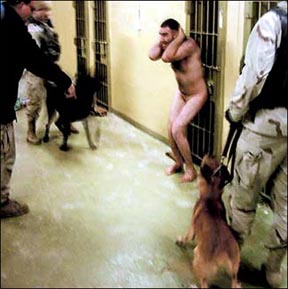
The Chevron Corporation has exposed its pestilent underbelly by hiring William J. Haynes II, a Department of Defense attorney who compiled lists of violent interrogation techniques for shadowy U.S. detention centers… In 2002 Haynes recommended a menu of 15 dehumanizing interrogation techniques to Secretary of Defense Donald Rumsfeld that included stress positions, removal of clothing, light deprivation and exploitation of phobias such as the "Arab fear of dogs." Rumsfeld eagerly signed off on Haynes' recommendations and dispatched a memo to Guantanamo Bay and other detention centers so they could be used on "enemy combatants," according to the senate investigative report.

The brass of nearly every branch of the U.S. Military vigorously opposed Haynes' ghoulish techniques. The opposition was so great, the list in part spurred Bush Administration lawyers to justify certain techniques by redefining the definition of torture so the CIA would be free to use nasty little methods such as waterboarding, a technique that simulates drowning. The method was invented by the syphilitic fiends who conceived the Spanish Inquisition (waterboarding was not on Haynes' list).

(More after the jump)

And it's not just Geluardi. Andrew S. Ross of the San Francisco Chronicle covered the story, in an article entitled "Report rips ex-Defense counsel, now at Chevron". Ross noted that the bipartisan report was signed by prominent Senators from both parties (including John McCain) and that when asked, Haynes defended his recommendations regarding torture. Editorials were run by the New York Times and the Miami Herald calling Haynes' advocacy of torture "deeply harmful" to the U.S.' image and urging that Haynes and the others who authorized the torture to be held accountable.

And all of this leads to the inevitable question: given all of Chevron's human rights problems around the world, why in the world would they hire William Haynes when he was so radioactive? For a company embarking in a multi-million dollar "human energy" public relations campaign, you would think they would have more sense than to hire one of the only lawyers in America who is under potential threat of facing charges as a war criminal.

But maybe they just don't care – or maybe they even see Haynes' willingness to advocate torturing prisoners as a plus. As Dugan over at Oil Watchdog stated, "with Chevron embroiled in human-rights lawsuits over oilfield pollution in Ecuador, and facing possible appeal of its exoneration in a Nigerian shooting case, Haynes (who walked straight into Chevron after leaving government in February), seems suited to the job."

Still, it seems unbelievable that Chevron really went out and paid big money to hire a guy under investigation by the Senate for human rights violations. After all, there had to be hundreds of highly competent corporate counsels around who wouldn't be putting "advocated and designed torture" as their "previous experience".

So what was Chevron thinking? Was it just that Darth Vader was unavailable?

Tuesday, December 2, 2008

Why The Foreign Corrupt Practices Act Needs Reform

As the Bowoto v. Chevron trial came to a conclusion in San Francisco, a disturbing trend has emerged that raises questions about Chevron's commitment to human rights. Well, at least one other disturbing trend has emerged -- much has already written about some of the disturbing threads that have emerged regarding Chevron's legal department (looking at the questionable tactics of General Counsel Charles James and the hiring of the controversial William Haynes who signed off on water boarding and other "harsh interrogation techniques" while working for Donald Rumsfeld) and some of the "interesting" defenses that the company has asked the jury in the case to buy.

But in light of all of this, it wasn't too surprising to learn in the Bowoto trial that Chevron regularly paid the Nigerian military forces for private protection -- including a bonus for the "special duty" that they performed in May 1998 when they shot and killed two protesters and wounded several others who had occupied a Chevron oil platform. Remember, evidence from the Bowoto trial proves that Chevron knew that these military forces had a track record of committing vicious human rights abuses. Even the US State Department had documented their abuses in the department's annual Country Reports. Yet, Chevron paid them anyway. Why? It seems that their very brutality is what made them attractive to Chevron. After all, such a reputation can be a powerful disincentive to local residents who want to protest.

Paying the soldiers of foreign countries to moonlight as a private security force is an inherently corrupting practice that undermines the rule of law and the neutrality of a foreign army. Imagine the uproaor if PDVSA, Venezuela's national oil company, decided to pay U.S. soldiers from Fort Bragg a bunch of cash to guard local Citgo gas stations with high-powered weaponry while they were on active duty. That's exactly the model that Chevron was using in Nigeria, with the primary difference being that at least a Citgo gas station would probably not be poisoning local water sources.

Payments of relatively small amounts of money can cause local soldiers, most of whom earn meager salaries, to be more loyal to company (Chevron) than to country. The risk is these soldiers can easily turn their guns on the very citizens they are supposed to be protecting in the name of providing "security" to an American company. That's the essence of what happened on Chevron's oil platform that day in Nigeria. Soldiers lost all sense of mission because they had been corrupted by an American company that essentially bribed them to turn their weapons against their fellow citizens.

You'd be surprised at how common the practice is even if the results are usually less tragic than what happened in Nigeria. In a fascinating expose, Jane Perlez of the New York Times demonstrated how the Louisiana-based Newmont Mining Company was paying soldiers in Indonesia huge salaries to protect operations in that country that were causing massive environmental damage. Similarly, the Burmese army guarding Chevron's pipeline in Burma has been accused of rape, murder, and forced conscription. In Ecuador, where Chevron is on trial for environmental damage, the company was scandalized in the national press for paying soldiers -- apparently in violation of Ecuadorian law -- for protection and housing for its lawyers at a local military base. In each of these cases military forces receiving "supplements" from Chevron became Chevron's local armed thugs who presumably were acting in Chevron's interests and under Chevron's orders.

This entire structure allows corporations to evade accountability. Because the armed forces are not directly employed by Chevron, Charles James can throw up his hands and claim Chevron had no control. Yet the victims generally cannot sue their own armed forces without risking further retaliation.

Given these dangers, Congress should extend the Foreign Corrupt Practices Act to outlaw direct payments by American companies to foreign military forces. Companies should pay taxes in their host country, the proceeds of which can help professionalize these forces. If security is such a problem, companies like Chevron can hire private security guards with clear lines of accountability to the company.

Monday, November 24, 2008

Charles James: Chevron's In-House Karl Rove

Since Scott Gilmore is doing a great job chronicling the day-to-day of the landmark human rights trial of Bowoto v. Chevron, I thought I would turn my attention to one of the masterminds behind Chevron's defense.

As this trial moves into the 4th week, one of the more interesting aspects of the Bowoto case has been the role played by Charles James, Chevron's General Counsel who is often found at counsel's table, sitting and watching. James is the highest-ranking African American in Chevron, serves on the company's management committee with CEO David O'Reilly, and is considered a disciple of Karl Rove-style legal and political tactics. A product of the current Bush Administration, he served as an assistant attorney general for antitrust under John Ashcroft. One of the best examples of the importance (or lack thereof) James places on Chevron's image is his recent hiring of William J. Haynes, former General Counsel at the Pentagon under Defense Secretary Donald Rumsfeld (gotta wonder if Dick Cheney is next on his "to hire" list). Haynes signed off on the infamous "torture memo" that permitted waterboarding. The irony is that Chevron now has a suspected human rights violator -- Haynes -- helping to run a legal department that is trying to beat back charges that Chevron is a human rights violator itself.

The Bowoto trial is an example of how Chevron faces the most high-profile human rights problems of any major oil company. Many believe it has to do with the fact that James, like Karl Rove, just doesn't seem to know how to finesse problems before they grow to such a point that they begin to create major risks for ownership. Some observers have opined that there is a clear parallel between James' insensitivity and clumsiness and Rove's divisive and aggressive tactics.

This lack of finesse may help explain why in the present case, Chevron finds itself on trial in San Francisco (of all places!) for helping the Nigerian military kill peaceful, apparently unarmed, protesters who had occupied an oil platform. It also helps explain why Chevron's environmental problems in Ecuador's rainforest have grown to the point where the company faces a $16.3 billion potential liability, according to an independent court-appointed expert. Chevron is also under attack for owning a pipeline in Burma that generates close to $1 billion annually for that country's brutal military regime.

James' response to these problems is simple -- he just bludgeons all of the company's opposition. He has repeatedly relied upon the same strategic playbook -- "deny everything, admit nothing, attack, attack, attack" -- each time Chevron is confronted with its human rights violations. In Ecuador, the court-appointed expert found 428 people had died from exposure to oil contamination and two of the company's lawyers are under criminal indictment for lying about the results of an earlier remediation. Yet to James and his group, everyone who challenges Chevron on human rights grounds is either a pirate, a liar, or a con man. (Larry Bowoto has been repeatedly described as a "pirate" throughout the case; Pablo Fajardo, the lead lawyer in the Ecuador environmental case, was called an "environmental con man" by Chevron earlier this year after winning the Goldman Award, the environmental movement's version of the Nobel Prize.)

So the question is: Is James acting in the best interests of Chevron's shareholders? The fact that this is even a serious question tells one how far Chevron has fallen in recent years. We now live in a world where globalization makes issues regarding human rights, the environment, and corporate responsibility directly related to a corporation's competitiveness. While Chevron is faced with increasing human rights problems, competitors BP and Shell have significant, comprehensive human rights standards in place. As oil companies are forced to negotiate exploration agreements with increasingly sophisticated governments, Chevron's reputation will necessarily affect its competitive standing -- since communities will look to partner with corporations that can generate the most profit while causing the least amount of environmental devastation. After all, given the recent mandate spelled out in the recent election results, with Democrats now in control of Washington and the country is hungering for a new energy policy, having Bush Administration retreads like James and Haynes run an oil company's legal department seems at best bizarre and at worst foolish.

In regard to the Ecuador case, James once told law students at Berkeley that Chevron will fight "until hell freezes over, and then skate on the ice". While this is a suspect stance for any lawyer to take in public, it is even more disturbing when viewed as an aspect of James' overall philosophy. His inability to head off legal disputes has cost the company millions in fees and has left it with huge potential financial and public relations liabilities.

Regardless of how the Bowoto trial turns out (and Chevron should win the legal case -- no matter what the venue, their resources alone should all but guarantee their victory), the very existence of this standoff just miles from the company's global headquarters must be seen as a huge PR disaster for Chevron. It remains to be seen if the leadership ultimately responsible to the shareholders is taking note of the way that Charles James has masterminded this case.

Thursday, October 30, 2008

Bowoto v. Chevron – The Flamingo Defense:

Bowoto v. Chevron continued on Wednesday, the second full day of the trial, with the examination of the plaintiff's expert and two witnesses for the plaintiffs, including the beginning of the questioning of lead plaintiff Larry Bowoto. For a better understanding of a brief background on the case and to understand what precisely is at stake in this landmark human rights case, take a look at Daniel Firger's posts here and here.

This morning I watched the beginning development of a very specific narrative thread by Chevron – the underlying claim that they did not know, and could not know, that the Nigerian military forces would flagrantly violate human rights in the manner that the plaintiffs allege.

This thread began to emerge as the plaintiffs finished examining their expert, Dr. Michael Watts. Dr. Watts characterized the military government of Nigeria in the 1990s as signaling a general "descent into flagrant authoritarianism" and testified regarding the flagrant human rights violations that the military forces of Nigeria had committed in other areas of the nation and the extensive media and non-governmental organization coverage that those abuses had attracted. Dr. Watts cited a wide-variety of sources regarding these violations, from Nigerian media reports, to Amnesty International reports, to U.S. State Departments assessments.

However, during the subsequent cross-examination, Chevron's attorneys sought to cast doubt on Dr. Watts' contention that the Nigerian military forces were widely known to be the perpetrators of massive human rights violations. The lawyers took great pains to illustrate that the human rights violations referred to in Dr. Watts' report came from a location several states away from where the Bowoto incident occurred – inferring that because the violations were so remote Chevron could not possibly have known about them.

However, the basic assertion is ridiculous. The idea that Chevron, an international oil-conglomerate that is sophisticated enough to operate in nations around the world and sophisticated enough to remain as a constant presence during shifting governmental power in Nigeria, easily surviving military coup after military coup, could not have discovered what the U.S. State Department was able to include in one of their general assessments is laughable. With a long-term presence on the ground in Nigeria, with at least two separate local offices and over two thousand employees, it is impossible to imagine that Chevron would have no idea that the military forces were, at times, something less than professional in their exercise of force. After all, even your average American with no special knowledge could tell you that African military forces aren't generally known for their restraint and respect for human dignity.

But fabricated naรฏvetรฉ have long been the backstop to Chevron's activities around the world, serving as the company's first line of defense against any allegations of outrageous conduct levied against the corporation, employing what I'll call the "flamingo defense" (for the ability of the company to stick it's head in the sand whenever trouble comes around). Here the corporation is arguing that it couldn't have known that the uncontrollable Nigerian forces were dangerous to send into this "nervous" situation. In Burma that company has long argued that it couldn't have known that the military government Chevron was propping up has been one of the most brutal human rights violators on Earth. In Ecuador the company has long alleged that it could not have known that applying environmental standards that were inappropriate for the sensitive ecosystem of the rainforest would have such devastating effects.

At the end of the day, Chevron is again recycling old tricks. As I wrote about yesterday, it appears that every time the corporation's back is to the wall, they reach to the same bag and pull out the same tools, pivoting to the attack along the same tired themes. Their constant position seems to be borrowed from the Karl Rove playbook of "Deny everything. Admit nothing. Attack, attack, attack." But maybe that is to be expected – Chevron's legal department is dominated by Bush administration loyalists, including Charles James and famous author of the "torture memo", William Haynes.

The trial will be continuing in coming days, with lead plaintiff Larry Bowoto launching into the heart of his testimony tomorrow morning.

I'll keep you updated.

Tuesday, October 28, 2008

Landmark Human Rights Trial Continues – Opening Statements and More:

Opening arguments began in the landmark Bowoto v. Chevron case today, with the plaintiffs launching into an emotional outline of the events that led to the eventual shooting of several Nigerian unarmed protestors (check out Dan Firger's blog for brief summary of the background of the case). The lead attorney for the plaintiffs – Dan Stormer – seemed to get choked up when describing the manner in which he asserted the Nigerian soldiers, whom were paid by Chevron, shot the villagers. Among those shot was lead plaintiff, Larry Bowoto, whom Stormer said was holding up his hands to show he was unarmed when he was shot. Heavy stuff.

But Chevron's lawyers were not to be outdone. Defendant's lead counsel, Robert Mittelsteadt, lead the jury through a lengthy, step-by-step explanation of Chevron's version of the trial, complete with sophisticated 3-D animation presentations of what the oil derrick looked like. Mittelsteadt spent his opening statement describing the protestors as sophisticated criminals and sea pirates who executed a commando-style raid where they stormed the oil barge, taking radio stations and heliports to prevent anyone from leaving the platform or communicating with the outside world. He described a situation where the villagers were acting on their threats to raid the platform and hold the workers of the oil derricks hostage, creating a "nervous situation" that was a "ticking time bomb" when the workers wanted to go home to their families. The bottom line, Mittelsteadt said, was that this case is about an American company's right and responsibility to protect its workers from threats.

But that statement is ridiculous. Of course American companies have a right and responsibility to protect their workers from harm – no reasonable person would argue that a company has no right or responsibility to protect its employees. The question isn't if they can protect their workers but instead if a company can kill unarmed protestors and ignore basic human rights in doing so. As Franklin D. Roosevelt said when addressing concerns of land owners worried about productivity during the Great Depression, "I may not be a lawyer, and I do not know much about the law, but I do know that you don't shoot your neighbor for trespass". Chevron is basically arguing that unarmed and peaceful protestors can be shot for merely trespassing on property that they claim is causing environmental contamination that is killing them.

And Chevron knows this – and they know that the soldiers working for them were out of control. During the plaintiff's opening statement Mr. Stormer showed the jury an email from one of Chevron's local directors referencing an incident from 1997, a year before Larry Bowoto and the other villagers were shot, in which the Nigerian soldiers that Chevron employs shot and killed a schoolteacher. In this communiquรฉ the director calls the soldiers "uncontrollable" and suggests that Chevron purchase rubber bullets to equip the soldiers with, so as to avoid any other unnecessary killings. Needless to say, Chevron neglected to take any action to either reign in the out of control soldiers or equip them with rubber bullets, setting the stage for the tragedy on the oil derrick that day.

So now Chevron's lawyers have spent their day characterizing the protestors as criminals and sea pirates who were intending to cause harm to their property. Hell, even Mr. Mittelsteadt basically admitted that the protestors may not have been armed, stating at one point that "an oil derrick is a very dangerous place for untrained people. If they turned a valve the wrong way, it could cause an explosion." So, I guess, since there was a danger in having untrained personnel on the oil derrick Chevron decided to solve that problem by having the untrained people shot. Hmm – not sure if that really fits with Mr. Mittelsteadt's assertion that Chevron didn't want anyone to be hurt.

But this tactic is old hat for Chevron – when confronted with individuals attempting to call out the corporation for human rights abuses, Chevron pivots to the attack, characterizing anyone standing up to them as greedy, money-grubbing, and out for a quick buck. Or worse, as in this case, Chevron calls them pirates and human rights violators themselves. They've used the same process in the long-running environmental litigation in Ecuador, where they've called Pablo Fajardo and Luis Yanza (the recipients of the Nobel Prize of the environmental movement, the prestigious Goldman Award and the recipients of a CNN Heroes Award) "environmental con men" who are attempting to embezzle money from Chevron. The corporation conveniently ignores or discounts the scientific evidence gathered in Ecuador over 16 years, including the assessment of an independent, court-appointed expert who found that Chevron was responsible for massive toxic contamination and faces a $16.3 billion dollar liability as a result.

Unfortunately, I was disappointed in plaintiff counsel's failure to see this coming. In their emotional opening statement this morning, Mr. Stormer failed to effectively preempt Chevron's basic point that Chevron was exercising its basic right and responsibility to defend its workers. Rather than simply highlighting that basic argument and emphasizing that Chevron has a right to defend their employees but cannot simply shoot unarmed protestors wholesale, the plaintiffs instead focused on the powerful emotion of their narrative, almost as if they were expecting that simply standing up and saying that Chevron shot unarmed people would carry the day for them. As a lawyer, I just don't think that is a sufficient response to Chevron's argument – you have to anticipate the arguments from the opposing side and explain how they are insufficient to address your point.

I thought that Chevron's lawyers got the better of it this morning – I hope that the counsel for the plaintiffs will start anticipating Chevron's responses as we move forward. I'm eagerly anticipating some drama in the days to come.

Monday, October 27, 2008

Landmark Human Rights Litigation has Chevron on the Run

Just in: A landmark human rights trial, Bowoto v. Chevron, has finally begun in federal court in San Francisco, and a handful of Nigerian villagers have Chevron's corporate brain trust scrambling to defend itself.

[Case background excerpted from Firger's blog on the case from this morning on the Huffington Post - Landmark Human Rights Trial Bowoto v. Chevron Set To Begin October 27]

Bowoto v. Chevron began in 1998 when Larry Bowoto and approximately 100 other community members staged a peaceful protest at one of Chevron's offshore oil platforms, demanding a meeting between company representatives and village elders to negotiate for the job training and education programs they had been promised in exchange for the severe environmental harms they had been forced to endure. They were unarmed, and after receiving word that Chevron would attend a meeting in a nearby village the following day, they prepared to leave the platform peacefully.

Before they could do so, three company helicopters carrying Nigerian military personnel swooped down on the platform and opened fire, killing two people and injuring several others, including Bowoto. Though Chevron claims the soldiers were firing in self defense, at least one of the men killed was shot in the back (my edit - AMW). Allegedly acting at the direction of Chevron, soldiers detained and tortured several other protestors, after which company personnel paid them for their services.

Bowoto and his co-plaintiffs filed their suit in 1999 in United States District Court in San Francisco. After nearly a decade of legal wrangling, the case now stands as an important milestone in the history of international human rights law:, a U.S. company could potentially be held liable in U.S. courts for gross human rights abuses committed in their overseas operations.

[End excerpt]

The case finally began today, and it appeared that Chevron was feeling the heat. Chevron turned out in force for today's first hearing, dispatching at least a dozen different lawyers and public relations personnel, including Vice-President and General Counsel Charles James, to the courthouse to combat the threat posed by these villagers. It was a surreal experience sitting in the courtroom and watching the contrast between the plaintiffs and the defendants: Larry Bowoto and his compatriots sitting calmly in their multicolored traditional garb contrasting sharply with Charles James and his lawyers and their expensive suits.

And the Chevron P.R. machine was in full swing, with familiar pro-Chevron blogger "Zennie62" attending the trial and meeting with Chevron's P.R. people immediately – at least until Judge Susan Illston issued a gag-order ordering both sides to refrain from issuing any statements or commenting on the case (let's see if that keeps Zennie quiet…Zennie has long been known to be a mouthpiece for Chevron in the 'blogosphere' and he has been under attack along with San Francisco writer Pat Murphy for being paid by Chevron to post blogs that mysteriously get google-bombed to the top of search engines. Neither Chevron, Murphy or Zennie has ever denied they get paid by Chevron even though they don't disclose such payments on their blogs.)

Judge Illston's gag order was the source of the biggest drama of the day – in a stunning setback for Chevron, Judge Illston forced Chevron's lead attorney to admit that Chevron has been paying Google to give priority to the website that give's Chevron's side of the story (purchasing "sponsored links" so that anyone searching "bowoto" or "bowoto chevron" would have the search send the user to Chevron's website first), then ordering Chevron to take down their links and stop any effort to manipulate search results by paying for sponsored-links, indicating that she was "disturbed" by Chevron's attempt to manipulate public perception of the trial.

I don't have any connection to Nigeria, and I don't have any ties to the plaintiffs, but as lawyer involved in the Amazon Defense Coalition, I think it's important to keep an eye on Chevron's rising human rights problems. Unfortunately, the tactics that Chevron has employed in this case – deny, delay, confuse, deny, attack, delay, and deny again – are all too familiar to anyone who has watched Chevron's attempts to deal with their rising human rights problems around the globe. From Nigeria to Ecuador to Burma, it is becoming clear that Chevron has a major problem when it comes to human rights and environmental policies – hopefully cases like Bowoto and the ongoing litigation in Ecuador will force the company to finally realize how out of step it is with the rest of the world and even its competitors in the oil industry, many of whom have developed sensible human rights policies while Chevron falls behind. The Amazon Defense Coalition released a press release on Monday about precisely this issue.

In any event, this case is just getting started – we'll be keeping an eye on it for the rest of the week. Stay tuned, and we'll keep you abreast of the drama as this landmark human rights trial unfolds…