Showing posts with label public relations. Show all posts

Monday, August 9, 2010

Chevron P.R. Campaign Gets It Wrong Again

Last week Chevron's P.R. mavens were at it again – this time spinning out a number of carefully edited and selected outtakes from the documentary "Crude" to as part of an all-out assault on the lawyers for the 30,000 Ecuadorians suing the company for destroying an area of the rainforest the size of Rhode Island. Chevron is trying to intimidate the lawyers by using the edited film clips as the basis for fraud charges that are a cynical and desperate 11th-hour attempt to escape liability by any means necessary.

(Recently, Chevron got access to the private film outtakes of celebrated documentarian Joe Berlinger from his award-winning documentary "Crude" – in a highly criticized, unprecedented assault on the First Amendment. After a long court fight, Berlinger surrendered the film to Chevron after the company promised not to use it for any purpose other than litigation. Take a look at this post here.)

Chevron has claimed that the video outtakes show that the plaintiffs' lawyers have manufactured the lawsuit against the company out of "smoke and mirrors" that are "all bullshit" and are simply an extortion racket to get money from the oil company. Over the last week the company's lawyers and public relations specialists have been working bloggers and journalists to try to push this view as far and wide as possible. Among Chevron p.r. firms is Hill & Knowlton, which used the same playbook for the tobacco industry, and Creative Response Concepts, which invented the Swift Boat ads that targeted John Kerry.

Of course, Chevron's not telling the truth about what the video outtakes do show. In fact, any viewing of the actual film footage – and not Chevron's edited, hand-picked, out-of-context scenes - shows exactly the opposite. Even the concept where the plaintiffs' attorney is making the comments Chevron has zeroed in on is in the context of a methodical outlay of the massive amount of the scientific evidence proving the company's guilt for creating the world's worst environmental disaster. Chevron has not disputed this – but it has refused to release the entire scenes, or the unedited video on which it was basing its public relations assault on the plaintiffs.

Nor, of course, does Chevron publicize the hundreds of hours of outtakes provided by Berlinger that point clearly to its own misconduct in Ecuador.

This shouldn't surprise anyone. Chevron has a long history of playing fast and loose with video, using misleading and mischaracterized film footage to try to score public relations points. Almost a year ago, Chevron spliced and diced footage that it claimed showed a bribery scheme in Ecuador – a claim that was later completely discredited as a company "dirty tricks" operation. Before that, Chevron paid a former CNN anchor, Gene Randall, to produce a video about the lawsuit that appeared to be a legitimate "investigative reporting" newscast, presumably to trick viewers into thinking they were watching an independent report on the issue.
The company has proven it will stop at nothing to try to find a way to evade its liability in Ecuador – earlier this week The Atlantic reported that a freelance reporter for the publication was flown to Columbia and offered $20,000 to go undercover on behalf of the company.

For all of the efforts to attack the lawsuit, it is interesting what Chevron has not done: focus on the evidence that clearly prove its responsibility for the worst oil-related contamination on the planet.

After more than 17 years of litigation, Chevron has not seriously disputed the scientific evidence that conclusively shows it is responsible for creating the world's worst oil-related disaster. In the Ecuador trial, more than 64,000 chemical sampling results – 80% of which were provided by Chevron's own scientists – and a 200,000 page trial record has produced a mountain of evidence showing the extent of the contamination. The evidence is clear: over 26 years of operations, from 1964-1990, Chevron produced a legacy of environmental destruction that is at least twice as large as the BP spill in the Gulf of Mexico in sheer size.

It is time for Chevron and its bloggers to stop misrepresenting film clips, quit the public relations battle, and take a look at the hard science that proves it is responsible for the horrible contamination.


Thursday, October 22, 2009

Chevron has problems all around the world…

This press release from FACES, a group which tracks environmental justice issues in the Philippines and the United States:


FOR IMMEDIATE RELEASE
October 22, 2009
3:30 PM

CONTACT: Filipino/American Coalition for Environmental Solidarity (FACES
)
Aileen Suzara, FACES
510-409-8627, info@facessolidarity.org

US State Department Gets It Wrong on Chevron's Operations in the Philippine
s
SAN FRANCISCO - October 22 - Chevron Corporation's recent nomination to the State Department's annual Award for Corporate Excellence (ACE) for its Philippine-based operations was met with opposition from US and Philippine environmentalists. In response to the nomination, FACES sent a letter to US Secretary of State Hillary Clinton urging the State Department to rescind the nomination.

"Communities are suffering from Chevron's toxic emissions, catastrophic spills, leakages, and the risk of fires and explosions," said Mari Rose Taruc, FACES Chevron Campaign Coordinator. "Nomination to the ACE award ignores Chevron's negative impacts on the health of communities in the Philippines and around the world where they operate."

FACES open letter to Secretary of State Hillary Clinton highlighted Chevron's toxic operations in the Philippines. "Chevron Philippines is no corporation to be proud of, not by the US or the Philippines. A little corporate donation to a local project does not replace the many lives lost or harmed due to their toxic operations in the fenceline communities of the Manila oil depots, as well as around the world where they operate," said the letter.

Philippine civil society and environmental groups have campaigned for years for the relocation of the massive Chevron oil depot out of Pandacan, a residential district in Metro Manila. An estimated 83,000 residents are directly impacted by the depot. Accidental spills, leakages and fires have overwhelmed the community over the years. A study conducted by Global Community Monitor in 2002 detected high levels of benzene, a known carcinogen and component of gasoline, in the air around Pandacan.

Yet despite opposition from the community and Church leaders, public health concerns, numerous ordinances, and a 2007 Supreme Court decision that ordered Chevron to relocate their depot for the "protection of the residents of Manila from catastrophic devastation," Chevron has continued to stall out this order.

"We are asking for relocation of the depot to an area with a proper buffer zone, away from the nearest communities. This is a holocaust waiting to happen," said leaders of Advocates for Environmental and Social Justice (AESJ). AESJ is among the Manila-based groups currently leading a campaign to relocate the depot.

For more information on Chevron's impacts in the Philippines and worldwide, download the True Cost of Chevron Alternate Report: www.truecostofchevron.com and visit www.facessolidarity.o
rg.

###
FACES is an intergenerational organization that works for environmental justice within communities in the United States and in the Philippines, and builds partnerships through advocacy, education, service, and organizing.

Monday, June 15, 2009

Chevron Praised Ecuador’s Courts for years and years…

until the company stood to profit by trashing them.

It turns out that long before Chevron picked up their new theme that "Ecuador's courts are biased" (no doubt a message that was refined in countless focus groups before Chevron's P.R. firms started pushing it out to you, loyal reader) the company spent years praising the courts, in an attempt to get the case transferred down to Ecuador. Turns out that Chevron loved the Ecuadorian courts - loved them just until evidence started being filed that showed that Chevron was responsible for the environmental and humanitarian disaster in the region. As soon as that happened, Chevron started their current messaging that Ecuadorian courts are corrupt and biased. Hmm – seems convenient for Chevron that Ecuadorian courts turned biased just as the evidence started revealing the depths of the environmental and humanitarian crime committed in the region.

But read for yourself – we're posting here the 14 sworn affidavits that Texaco (which Chevron merged with in 2001) filed in U.S. Federal Court praising the Ecuadorian courts as fair and unbiased. You can see for yourself exactly what Texaco (and now Chevron) thought about the Ecuadorian judiciary - right up until the company had a $27 billion interest in trashing them.

This is Chevron's M.O. - do anything, and say anything, you have to in order to avoid having to take responsibility for your actions.

Friday, February 6, 2009

Director of Crude Points Out Lies

Interesting letter to the editor in today's Washington Times. Apparently filmmaker Joe Berlinger wasn't thrilled with Chevron's misinformation about the production of the documentary. Read on:

In his article about the ongoing legal battle against Chevron Corp. in the Ecuadorean Amazon ("Chevron urges U.S. to revoke Ecuador trade," Nation, Thursday), Tom LoBianco mentions that Chevron "has been bombarded with negative stories surrounding the lawsuit and is the target of a new documentary produced in part by the plaintiffs in the lawsuit." I assume that the documentary Mr. LoBianco refers to is my film "Crude," which premiered to great critical acclaim at the Sundance Film Festival last month. Contrary to your article, "Crude" was in no way produced by the plaintiffs or anyone affiliated with either side of the lawsuit. The film is a wholly independent production and was made with the cooperation of representatives of both the plaintiffs and Chevron, including Kent Robertson, the Chevron spokesperson quoted in Mr. LoBianco's article. In fact, I invited Kent Robertson to participate in the film's premiere in Park City, Utah - which was attended by the festival's founder, Robert Redford - but Mr. Robertson declined my invitation.

Making "Crude" was an intense, often grueling three-year process, and we worked extremely hard to ensure that the film presents an accurate portrayal of this highly controversial and complicated case. Following the screenings at Sundance, the film was widely praised by critics and journalists not only for its artistic merits, but also for its editorial balance and fairness to all sides of the lawsuit. For example, James Nelson of Agence France-Presse wrote, "Berlinger clearly knows about balance in covering an important issue." David Germain of Associated Press calls the film "a fairly balanced portrait of the case, with Chevron's side well represented."

To my knowledge, Mr. LoBianco has not yet seen the film, so his characterization of the film as a partisan attack on Chevron is troubling and makes me wonder where his information is coming from. Unlike my film, the writer of your article did not seem to think it was important to either see the film or to research the false claim of the film's partiality.

JOE BERLINGER

Director/producer, "Crude"

Hmmm. Looks like the Washington Times has egg on their face on this one. I bet they're not super thrilled with the Chevron PR guys right about now - looks like they trusted what this "Kent Robertson" told them about the production of the film and then they got burned.
I guess that's one newspaper that won't be rushing to do Chevron any favors anytime soon.

Wednesday, December 31, 2008

William J. Haynes: What Was Chevron Thinking?

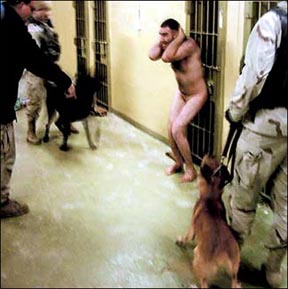
John Geluardi - author of The Snitch blog over at SF Weekly - put out a post last week about William Haynes, calling him "Chevron's Prince of Darkness". Apparently Haynes – who was recently hired by Chevron to serve as their chief corporate counsel - was just called out in a Senate Arms Services Committee (SASC) bipartisan investigation that found Haynes' actions while working for the Pentagon reviewing and approving of torture "deeply disturbing". Geluardi describes the hiring:

The Chevron Corporation has exposed its pestilent underbelly by hiring William J. Haynes II, a Department of Defense attorney who compiled lists of violent interrogation techniques for shadowy U.S. detention centers… In 2002 Haynes recommended a menu of 15 dehumanizing interrogation techniques to Secretary of Defense Donald Rumsfeld that included stress positions, removal of clothing, light deprivation and exploitation of phobias such as the "Arab fear of dogs." Rumsfeld eagerly signed off on Haynes' recommendations and dispatched a memo to Guantanamo Bay and other detention centers so they could be used on "enemy combatants," according to the senate investigative report.

The brass of nearly every branch of the U.S. Military vigorously opposed Haynes' ghoulish techniques. The opposition was so great, the list in part spurred Bush Administration lawyers to justify certain techniques by redefining the definition of torture so the CIA would be free to use nasty little methods such as waterboarding, a technique that simulates drowning. The method was invented by the syphilitic fiends who conceived the Spanish Inquisition (waterboarding was not on Haynes' list).

(More after the jump)

And it's not just Geluardi. Andrew S. Ross of the San Francisco Chronicle covered the story, in an article entitled "Report rips ex-Defense counsel, now at Chevron". Ross noted that the bipartisan report was signed by prominent Senators from both parties (including John McCain) and that when asked, Haynes defended his recommendations regarding torture. Editorials were run by the New York Times and the Miami Herald calling Haynes' advocacy of torture "deeply harmful" to the U.S.' image and urging that Haynes and the others who authorized the torture to be held accountable.

And all of this leads to the inevitable question: given all of Chevron's human rights problems around the world, why in the world would they hire William Haynes when he was so radioactive? For a company embarking in a multi-million dollar "human energy" public relations campaign, you would think they would have more sense than to hire one of the only lawyers in America who is under potential threat of facing charges as a war criminal.

But maybe they just don't care – or maybe they even see Haynes' willingness to advocate torturing prisoners as a plus. As Dugan over at Oil Watchdog stated, "with Chevron embroiled in human-rights lawsuits over oilfield pollution in Ecuador, and facing possible appeal of its exoneration in a Nigerian shooting case, Haynes (who walked straight into Chevron after leaving government in February), seems suited to the job."

Still, it seems unbelievable that Chevron really went out and paid big money to hire a guy under investigation by the Senate for human rights violations. After all, there had to be hundreds of highly competent corporate counsels around who wouldn't be putting "advocated and designed torture" as their "previous experience".

So what was Chevron thinking? Was it just that Darth Vader was unavailable?

Monday, December 22, 2008

The Real Human Energy


Over the past several months Chevron has rolled out a huge public relations campaign - their "human energy" campaign - (spending over $15 million dollars in October alone, according to one report) in an effort to greenwash the company's image. But I ran across this video over on youtube chronicling the real story about Chevron's "Human Energy" campaign. Take a look and let me know what you think...

Wednesday, December 17, 2008

Corruption: Shouldn’t We All Just Say No?

As I stumbled through the internet doing some follow-up research on the Foreign Corrupt Practices Act (FCPA) (following up on my post from a couple of weeks ago), as I was surprised to find that I'm not the first one to look to Chevron while investigating the FCPA: Charles James, the general counsel and head lawyer for Chevron recently spoke at U.C. Berkeley's law school, Boalt Hall, at a conference on global corruption.

While there wasn't a full transcript on the event, it seems from the summary of remarks that James identified himself as "not a big fan of the Foreign Corrupt Practices Act" and heavily criticized the enforcement of the law, seemingly arguing that when the law is enforced, companies like Chevron are at put at a competitive disadvantage.

James' remarks offered a very different perspective than the other panelists. Judith Miller, general counsel of engineering giant Bechtel corporation, argued that the short-term pain of losing business to companies that do pay bribes is well worth the payoff of curbing corruption, since bribes hurt the countries that receive them AND the companies that pay them (since the bribes retard development of the countries, encourage further corruption, and force the companies to incur additional operating costs to secure contracts). However, James doesn't seem to see it this way, only seeing the FCPA as putting Chevron at a competitive disadvantage because they can't legally pay foreign officials for preferential treatment.

You would think a company running a massive p.r. campaign to show their good corporate governance – the "human energy" initiative – would embrace the FCPA. But under Charles James, I guess not.